

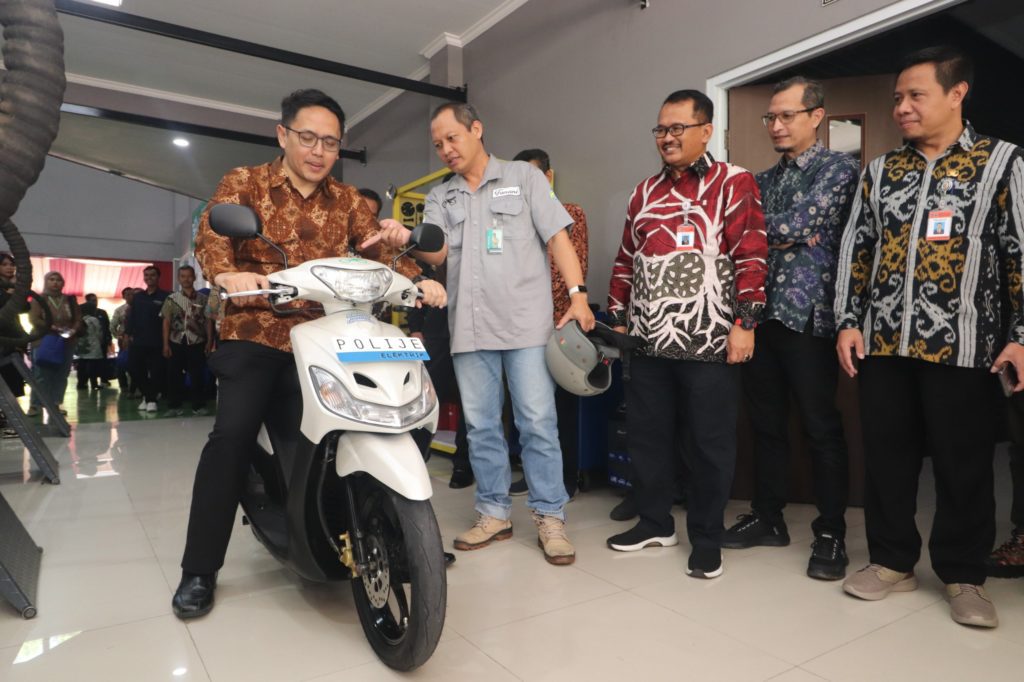
Politeknik Negeri Jember (Polije) has officially inaugurated the TEFA Auto Hub, a new facility that integrates vocational education with renewable energy and automotive technology. This Teaching Factory (TEFA) model is designed to provide real-world experience for students while serving as a public service center for automotive maintenance and training.
The TEFA Auto Hub offers comprehensive automotive services including conventional and electric vehicle maintenance, spare parts sales, and practical training for energy conversion systems. The facility also features solar-powered fast-charging stations for electric motorcycles and DC fast-charging units for electric cars, supporting Indonesia’s shift toward clean energy transportation.
This initiative reflects Polije’s commitment to transforming vocational education through innovation. By aligning academic programs with industry developments, especially in renewable energy and sustainable technology, Polije prepares its students to be job-ready and responsive to future challenges.
More than just a service facility, the Auto Hub is a strategic educational platform that connects classroom theory with hands-on industrial application. It functions as a living laboratory where students, lecturers, and the public engage in applied research, technical training, and service-based learning.
As part of its long-term strategic vision, Polije aims to become a leading polytechnic in Indonesia and a recognized institution in Asia by 2035. The TEFA Auto Hub contributes to this vision by demonstrating institutional responsiveness to global trends and its ability to produce solutions with real societal impact.
Innovation like the Auto Hub plays a significant role in strengthening the institutional image of Polije. Not only does it elevate the reputation of the institution nationally, but it also builds credibility and visibility at the international level—positioning Polije as a reference point for vocational excellence and sustainability-focused education.
Through forward-thinking initiatives, Polije increases its institutional performance by enhancing academic relevance, strengthening industry linkages, and fostering public trust. Facilities like the Auto Hub showcase how vocational campuses can become engines of innovation that directly benefit the community and the economy.
Looking ahead, Polije plans to expand the scope of TEFA Auto Hub by developing research in electric vehicle systems, forging new partnerships with the private sector, and offering certification programs for green automotive technologies. These developments will further support Polije’s mission to lead in vocational innovation and international collaboration. (rda)