
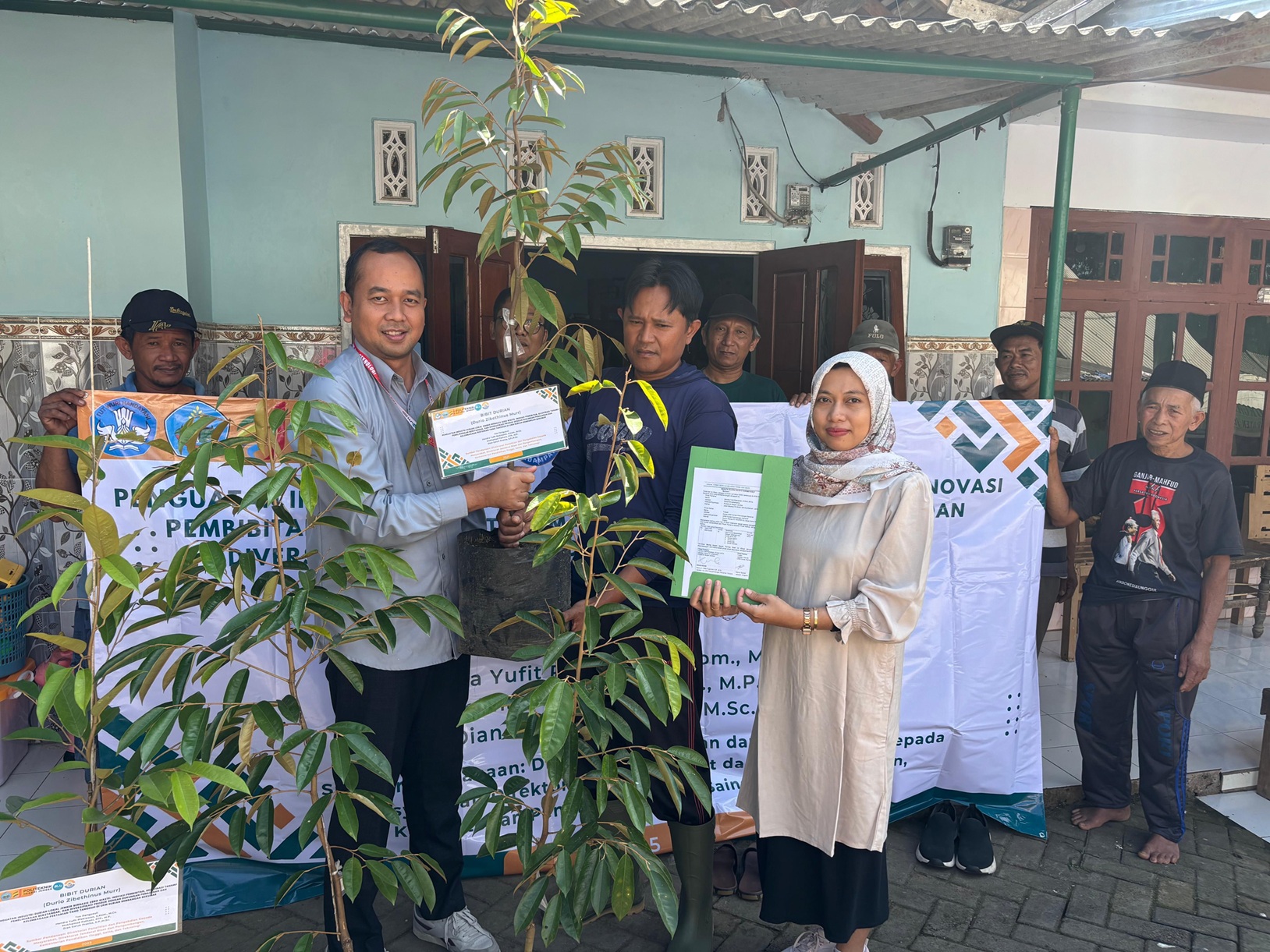
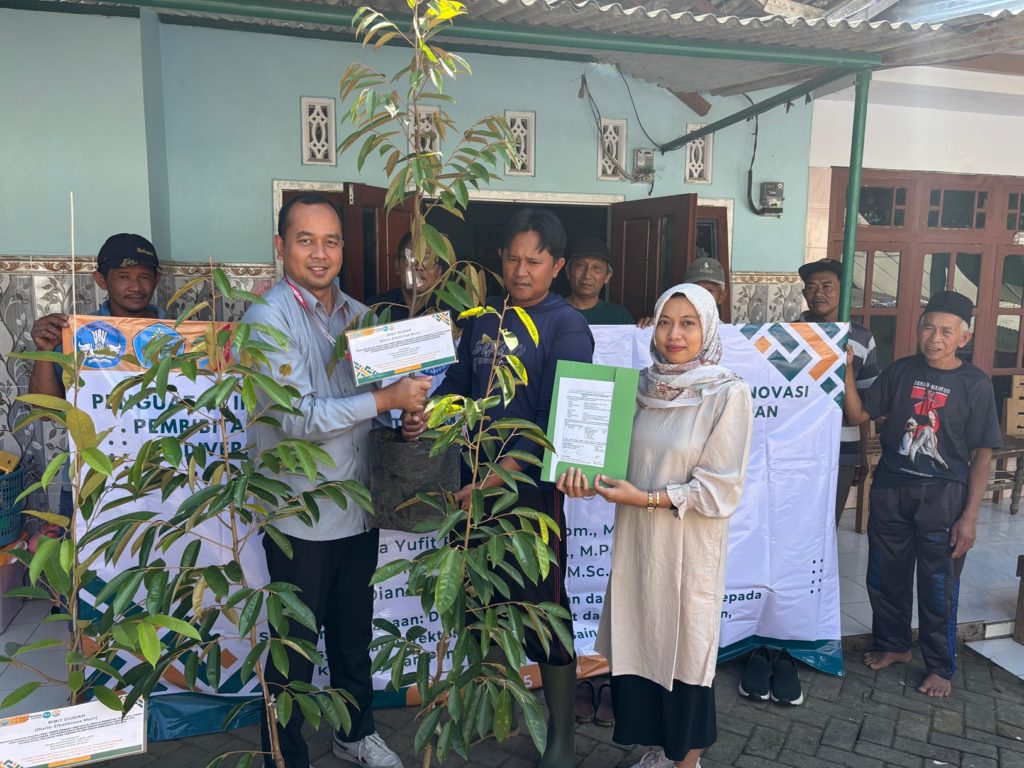
The Community Service Team of Politeknik Negeri Jember (Polije) has implemented the Strengthening of the Local Durian Industry in Jember Based on Zero Waste program in collaboration with UKM Durian Rembangan Bersinar in July 2025. This initiative serves as a strategic step to boost the productivity, competitiveness, and sustainability of Jember’s local durian industry.
Durian (Durio zibethinus Murr.), known as the “king of tropical fruits,” is a local favorite for its distinctive taste. Jember Regency is recognized as one of the largest durian production centers in East Java, recording 100.2 thousand tons in 2019. Major producing areas include Panti, Garahan, Sumberjambe, Arjasa, and Patrang. In Rembangan, UKM Durian Rembangan Bersinar manages more than 500 durian trees, which have become an economic backbone for the local community.
Despite this potential, farmers continue to face challenges, including cultivation practices that do not yet comply with Good Agricultural Practices (GAP), aging trees past their productive stage, and limited market access.
To address these issues, the Polije team—led by Hendra Yufit Riskiawan, with members Dian Galuh Pratita and Mokhamad Fatoni K—organized a series of activities. These included training on GAP and Good Handling Practices (GHP), flower induction techniques using plant growth regulators, and institutional assistance in management and marketing.
The program received positive responses from the community. Farmers actively participated in training, experimented with new technologies, and began adopting modern strategies for durian orchard management. Students involved in the program also gained hands-on experience, serving as change agents in the field.
Team Leader Hendra Yufit Riskiawan emphasized the program’s tangible impact:
“This program not only strengthens durian farmers in terms of cultivation and institutional capacity but also paves the way for Jember’s local durian to compete in broader markets,” he stated.
He further highlighted that the zero waste principle was a cornerstone of the program.
“We want to ensure that nothing goes to waste—from organic byproducts that can be processed into fertilizer to derivative durian products with high market value. This approach creates a more sustainable local economy,” he added.
Through this program, Jember durian is expected to gain wider recognition as a high-value commodity while serving as a driver of community welfare, particularly in the Rembangan area and its surroundings.