

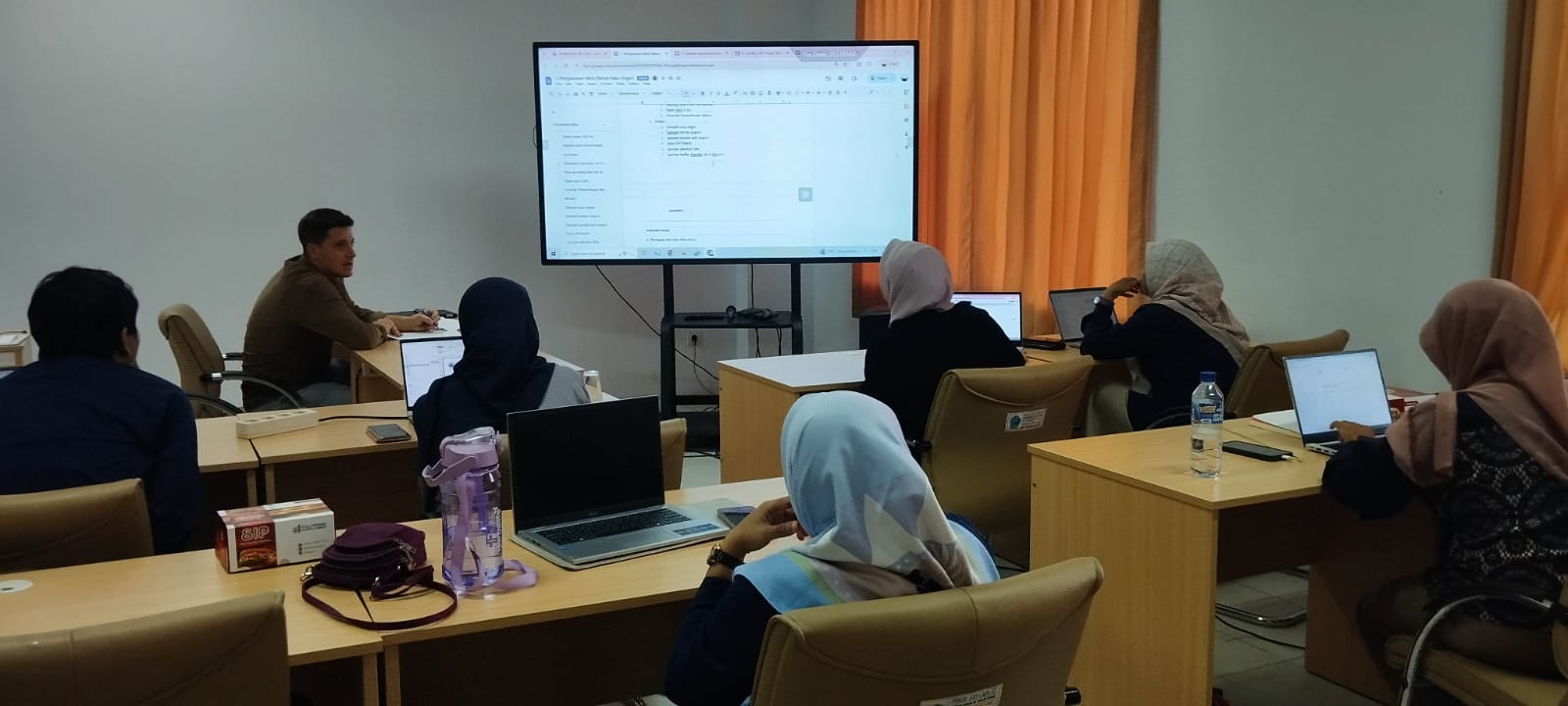
The afternoon session of the third workshop day at Politeknik Negeri Jember (POLIJE) focused on the drafting of Standard Operating Procedures (SOPs) for sterilized milk production. Building on the morning’s PBL activity, this session emphasized the role of structured documentation in ensuring product safety, consistency, and compliance with industry requirements.
Led by POLIJE teachers, participants were guided through a step-by-step process of SOP development. Each stage of production—from the intake of raw materials to sterilization, packaging, and storage—was carefully analyzed and documented. Teachers highlighted that SOPs not only serve as a reference for students but also as a foundation for quality assurance in industrial practice.
Group discussions became a central feature of the activity, allowing participants to share perspectives and work collaboratively on designing detailed SOPs. The emphasis was placed on hygiene, food safety measures, and quality control protocols. This collaborative approach reflected the workshop’s commitment to merging academic learning with real-world applications.
Consultants from Skills for Competitiveness (S4C) contributed valuable insights throughout the session. Drawing on international benchmarks, they encouraged POLIJE to align its SOPs with global best practices, reinforcing the institution’s ambition to build strong international collaborations. Their feedback provided practical suggestions for strengthening laboratory documentation and ensuring that SOPs met industry expectations.
By the end of the session, participants presented their draft SOPs to the group, showcasing a strong grasp of both technical processes and managerial principles. Immediate feedback from teachers and consultants helped refine the drafts into practical documents ready for use in training and production.
For POLIJE, the activity illustrated the dual role of SOP development: as a learning tool in academic environments and as a professional standard for industrial operations. Teachers emphasized that such practices prepare students to enter the workforce with skills that extend beyond theory, equipping them with competencies highly valued by employers.
This session also reflected POLIJE’s broader vision of becoming a polytechnic of excellence. By embedding global standards into its teaching factory operations, the institution strengthens its reputation as a hub of innovation and vocational expertise, capable of producing graduates who are industry-ready and internationally competitive.
Ultimately, the SOP drafting exercise for sterilized milk demonstrated the power of collaboration between educators, consultants, and participants. It underscored POLIJE’s proactive efforts to bridge academic knowledge with industrial practice, reaffirming its role as a leader in applied education and food industry innovation.