

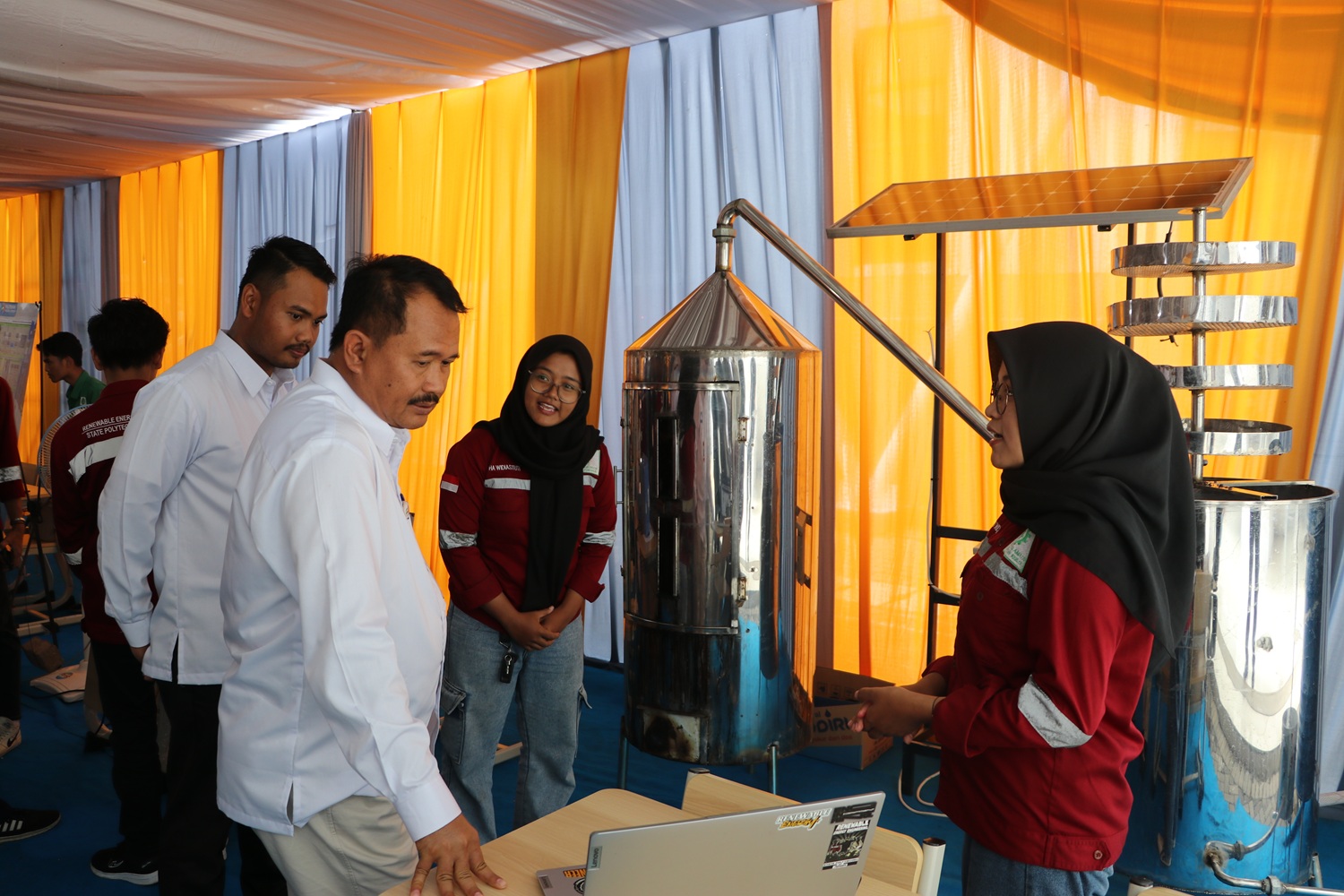
Students of Renewable Energy Engineering successfully created SIPIRO, an eco-friendly smoked fish processing tool based on solar cells. SIPIRO is capable of increasing production efficiency while also generating a valuable byproduct: pyroliquid oil. This innovation directly contributes to SDG 7 (Affordable and Clean Energy) and SDG 12 (Responsible Consumption and Production).
The innovation was developed over two months as a solution to common problems in conventional fish smoking, which are often energy-intensive and pollute the air.
Mohamad Anggis Safii Wijaya, the team leader, explained that the device was designed to help small business owners become more productive and sustainable. He emphasized the product’s alignment with SDG 8 (Decent Work and Economic Growth) by improving efficiency for MSMEs.
“The presence of SIPIRO is expected to become a solution for traditional smoked fish entrepreneurs to be more efficient, save energy, and be environmentally friendly,” he said.
SIPIRO technology relies on solar panels as the primary energy source to power the fire blower and cooling system. The process utilizes a closed smoking chamber with a three-layer filter and a condensation channel based on natural materials. This design reduces emissions while maintaining the quality of the smoked fish product.
Artha Widiastuti, a team member, added that the innovation brings significant changes in production time and results. The ability to convert smoke into valuable liquid smoke also supports the circular economy concept under SDG 12.
“With the condensation system and natural pollution filter, SIPIRO accelerates the smoking process by up to 50 percent and is capable of converting smoke into marketable liquid smoke, without the risk of fire,” she explained.
The supervisory lecturer, Dr. Ahmad Fauzi, assessed this technology as a tangible step in applying renewable energy to support the food sector MSMEs.
“SIPIRO is a concrete example of how vocational innovation can provide added economic value to the community while simultaneously supporting environmental sustainability,” he stated.
In the future, the team plans to expand the application of SIPIRO technology to various coastal areas to encourage green transformation in traditional smoked fish production centers across Indonesia.