
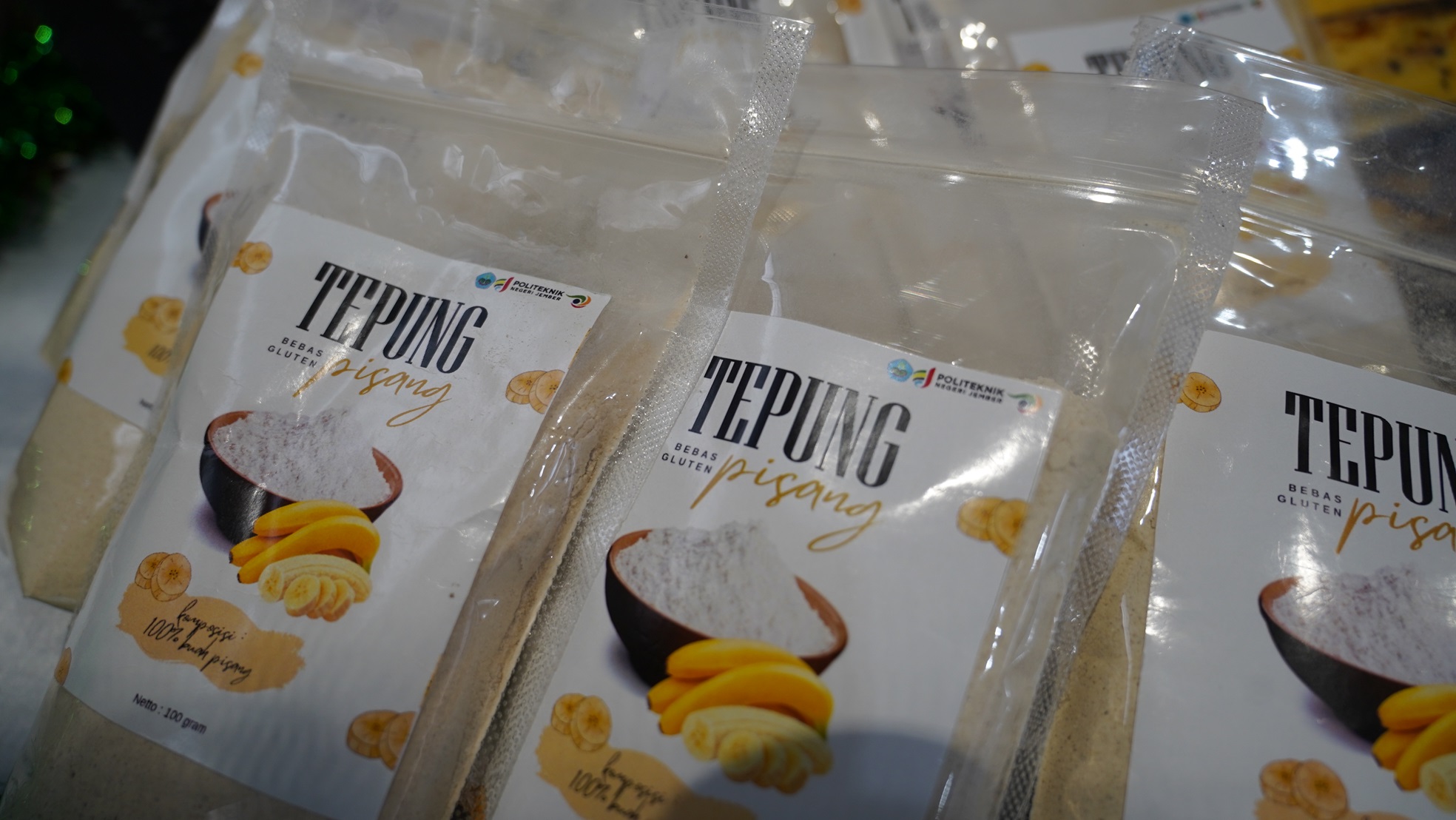
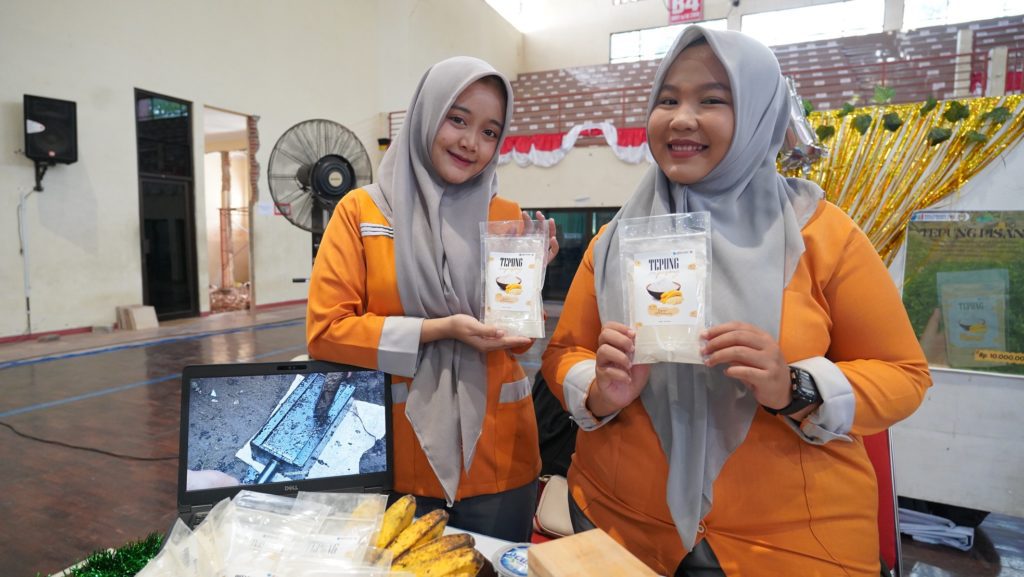
Students from Politeknik Negeri Jember (Polije) have introduced a new food innovation by producing gluten-free flour made from kepok bananas—an abundant agricultural product commonly found in Indonesia’s rural areas. This innovation not only provides a healthy food alternative but also serves as a concrete step toward strengthening village independence through the utilization of local farming potential.
The initiative, led by a student group focused on food innovation, uses raw kepok bananas as the main ingredient. According to team member Alessia Sandra Dewi, the entire process is carried out naturally, with attention to hygiene and sustainability principles.
“We begin by selecting green, unripe bananas to preserve their full nutritional value. They’re thoroughly washed under running water to remove dirt before being peeled and thinly sliced,” Alessia explained.
The banana slices are then sun-dried for two to three days, with good air circulation and regular turning to ensure even drying. Once fully dried, the slices are cooled at room temperature before being ground into a fine, soft powder using a blender or mill. The resulting banana flour is naturally gluten-free, making it suitable for health-conscious consumers, especially those with gluten intolerance.
“With this gluten-free banana flour, we aim to tap into the abundant local potential and create a healthy food alternative that can be developed into a village’s flagship product,” Alessia added.
She also emphasized the economic benefits, noting that the innovation could open new income streams for banana farmers and local communities.
“We want people to realize that agricultural products like kepok bananas have added value when processed properly. Hopefully, this will inspire the growth of new rural food entrepreneurs,” she said.
The process is low-cost and easy to replicate, making it accessible to small communities. With its high nutritional value and broad application in gluten-free baking or health foods, this banana flour could become a sustainable village-based business model.
In the context of growing global concerns around food security and dietary health, this innovation aligns with the international push for localized food systems, waste reduction, and inclusive economic growth. As such, the initiative not only strengthens Indonesia’s food resilience but also contributes to global conversations on sustainable food innovation and rural development.
Once again, Polije students demonstrate how vocational education can produce meaningful, real-world impact by harnessing local wisdom and creativity to address health, environmental, and economic challenges—all beginning at the village level. (rda)