
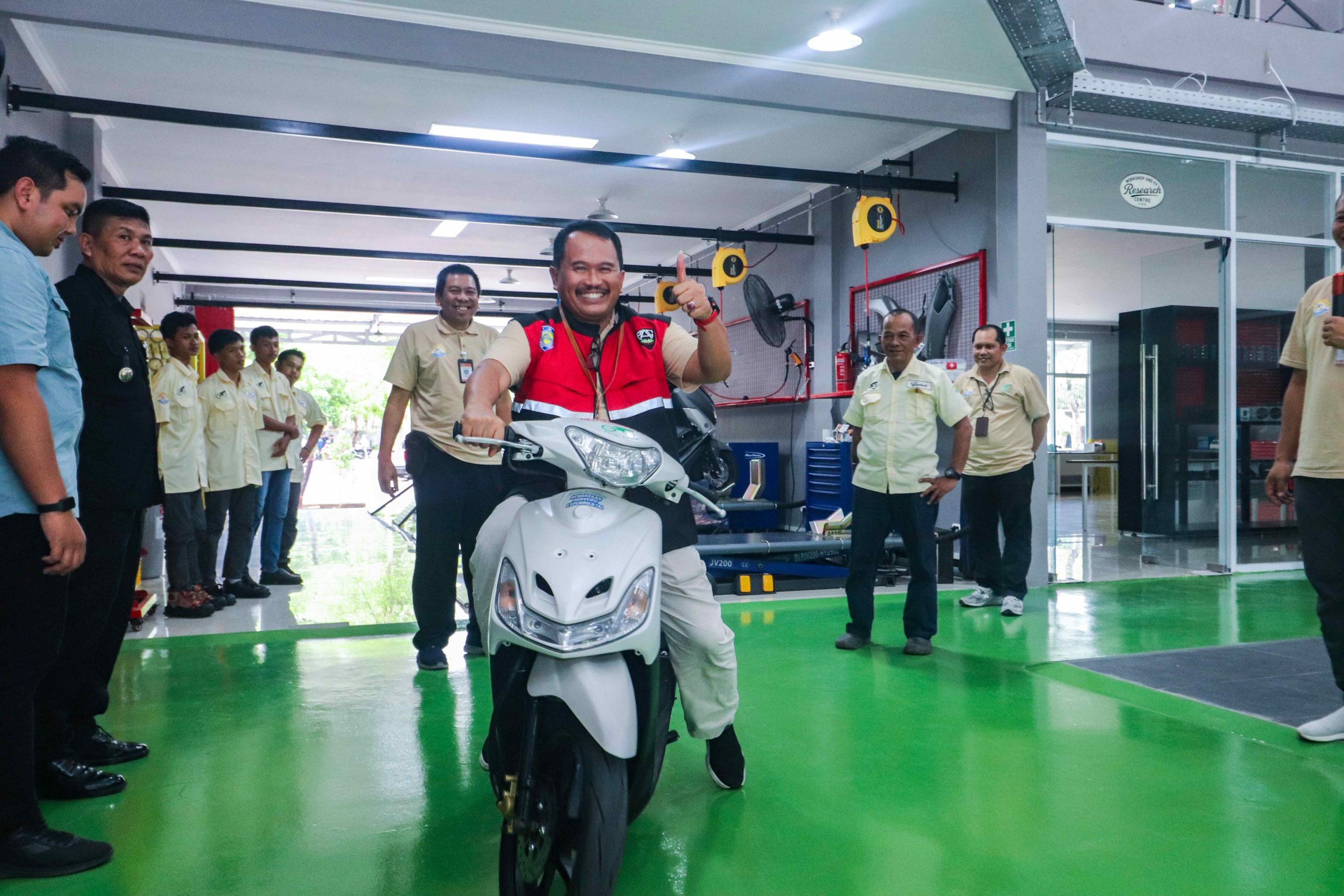
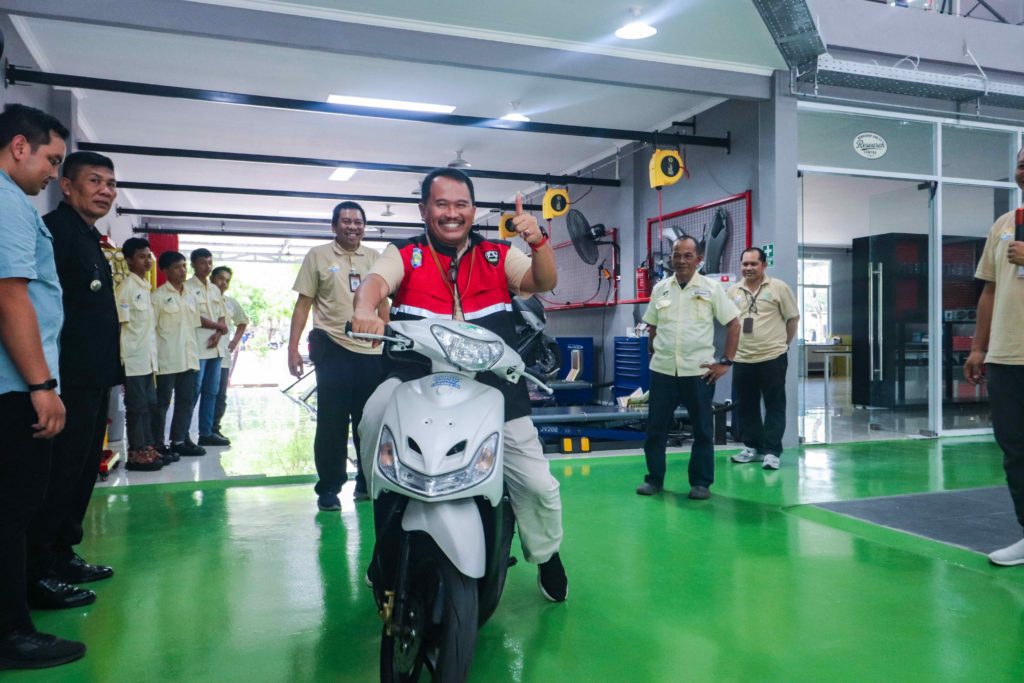
Politeknik Negeri Jember (Polije) has taken a major leap in integrating green innovation into vocational education by launching the TEFA Auto Hub, a forward-looking facility that combines teaching, innovation, and service in the automotive sector. The soft launching ceremony was held at the Auto Hub building, located within the Polije campus.
The TEFA Auto Hub is part of Polije’s Teaching Factory (TEFA) initiative, which aims to bridge theoretical knowledge with hands-on industry practices. Specifically designed to support the maintenance and servicing of both conventional and electric vehicles, the Auto Hub will serve as a practical training center for students from the Mechanical Engineering Department, while also functioning as a service center for the Polije community.
The facility’s development aligns with Polije’s commitment to promoting renewable energy and sustainability, in line with global trends toward green automotive technologies. According to Director Saiful Anwar, the Auto Hub represents Polije’s proactive role in anticipating the future of mobility. “The TEFA Auto Hub is a strategic facility designed not only to support electric and fossil-fuel vehicles, but also to shape a generation of vocational graduates who are skilled in sustainable automotive solutions,” he explained.
The Auto Hub is currently undergoing a pilot trial period, during which it will provide limited services exclusively for internal users—students, lecturers, and staff members. This early phase will focus on evaluating service flow, standard operating procedures (SOPs), and overall system readiness before it is officially opened to the public.
Beyond vehicle servicing, the TEFA Auto Hub is also envisioned to become a center for electric vehicle (EV) conversion training, where students will be equipped with the skills to transform gasoline-powered motorcycles into electric ones. This reflects Polije’s vision to take an active role in supporting the national agenda for reducing carbon emissions in the transportation sector.
In addition to its educational functions, the Auto Hub is preparing to install a Direct Current (DC) fast charging station specifically designed for electric cars. This public infrastructure will further support the growing adoption of EVs within and beyond the campus community.
The hub also features solar-powered charging services for electric motorcycles, which will be available outside the workshop area. This service is not only sustainable but also cost-effective, encouraging more users to switch to electric-powered two-wheelers.
The integration of these green technologies makes the TEFA Auto Hub one of the most advanced facilities of its kind within Indonesia’s vocational higher education institutions. It embodies Polije’s long-term commitment to innovation, community service, and environmentally friendly practices.
Through the TEFA Auto Hub, students will gain direct experience with modern automotive technologies, enabling them to master competencies that are relevant to today’s and tomorrow’s job markets. This hands-on model also strengthens the entrepreneurial and problem-solving mindset of vocational students.
From a broader perspective, the initiative is expected to inspire similar models across the country, as vocational institutions play a vital role in supporting Indonesia’s national energy transition and sustainable development goals (SDGs), especially those related to quality education and affordable clean energy.
Polije also aims to use the Auto Hub as a platform to attract industry collaboration and research opportunities in the field of electric mobility and renewable energy. The institution invites partnerships with both domestic and international stakeholders to advance joint innovation projects.
As Polije prepares for the official grand opening of the TEFA Auto Hub in the near future, the soft launch stands as a milestone toward achieving a greener, smarter, and more industry-aligned vocational education ecosystem in Indonesia. (rda)