
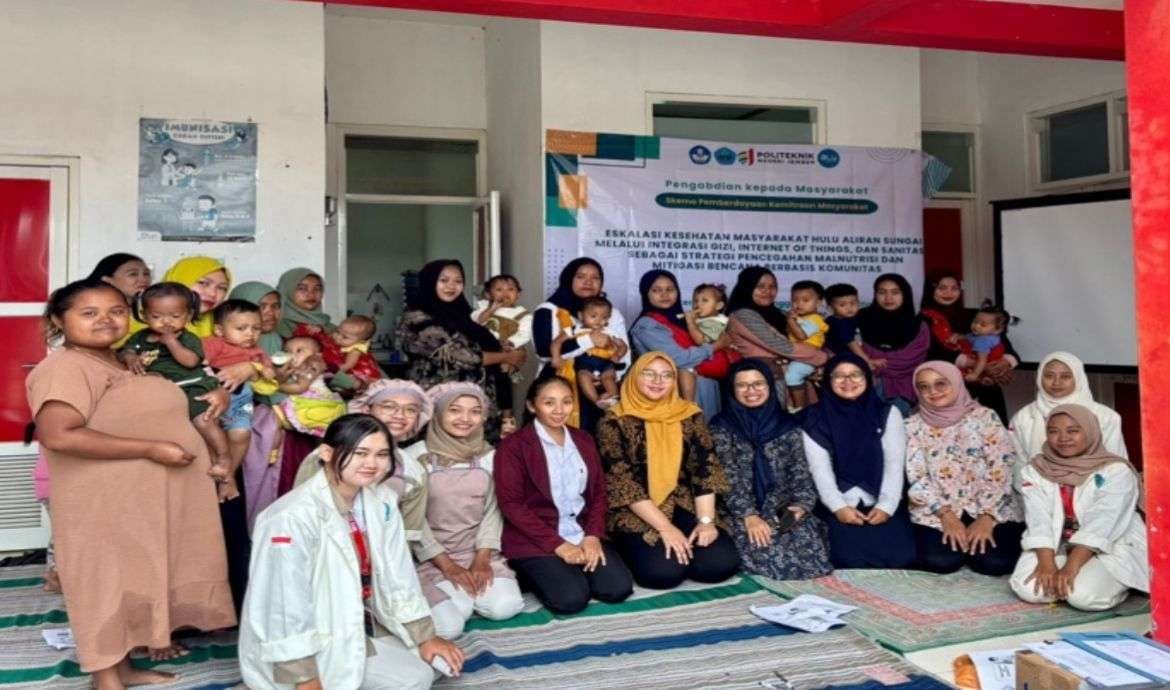
In a concerted effort to prevent stunting, Jember State Polytechnic (Polije) has launched a comprehensive community empowerment program for the residents of Sucopangepok Village, Jelbuk District. The initiative, which seamlessly blends nutritional education, practical technology, and environmental sanitation, is a direct application of the university’s community service mandate, supported by funding from the Directorate of Research and Community Service (DPPM) of the Ministry of Education.
The program, chaired by nutritionist Miftahul Jannah, S.Gz., M.Gizi., was rolled out through a series of four targeted meetings from July to August 2025. She emphasized the program’s practical approach, stating, “We want the community to not only receive theory but also to practice directly so they can apply it in their daily lives.”
The first meeting on July 21 focused on building a collaborative foundation, engaging village officials, midwives, and community leaders. The Head of Sucopangepok Village, Abd. Rohman, underscored the importance of this synergy. “Toddler nutrition remains our primary concern. We hope this collaborative program can bring real and measurable impact to our community,” he affirmed.
Subsequent sessions delivered hands-on training. On July 29, families received education on exclusive breastfeeding, practiced correct breastfeeding positions, and learned to prepare nutritious complementary foods (MPASI) using locally available ingredients. The following day, the community was introduced to early detection methods for stunting and the innovative “Budikdamber” (fish farming in a bucket) system, which cultivates catfish and kale to provide a sustainable source of protein and vitamins for families.
The final session on August 26 addressed critical environmental factors, covering household sanitation and toddler feeding schedules. Given the village’s location in a disaster-prone area, the program also included a simulation for flood and landslide evacuations.
The village midwife, Tria Dewi Poerbarini, A.Md. Keb., witnessed firsthand the program’s effect on mothers. “Until now, many mothers were still confused about their children’s diet. With this training, they have a better understanding and are ready to implement it at home,” she shared.
Looking ahead, Miftahul Jannah confirmed the program’s continuation in October 2025, which will include disaster mitigation training for health cadres and the launch of a digital posyandu application to streamline the recording of toddler growth. Through this sustained synergy between the academic institution, local government, and the community, Sucopangepok Village is being developed into a model of how integrated approaches can build a healthier, more resilient society.