
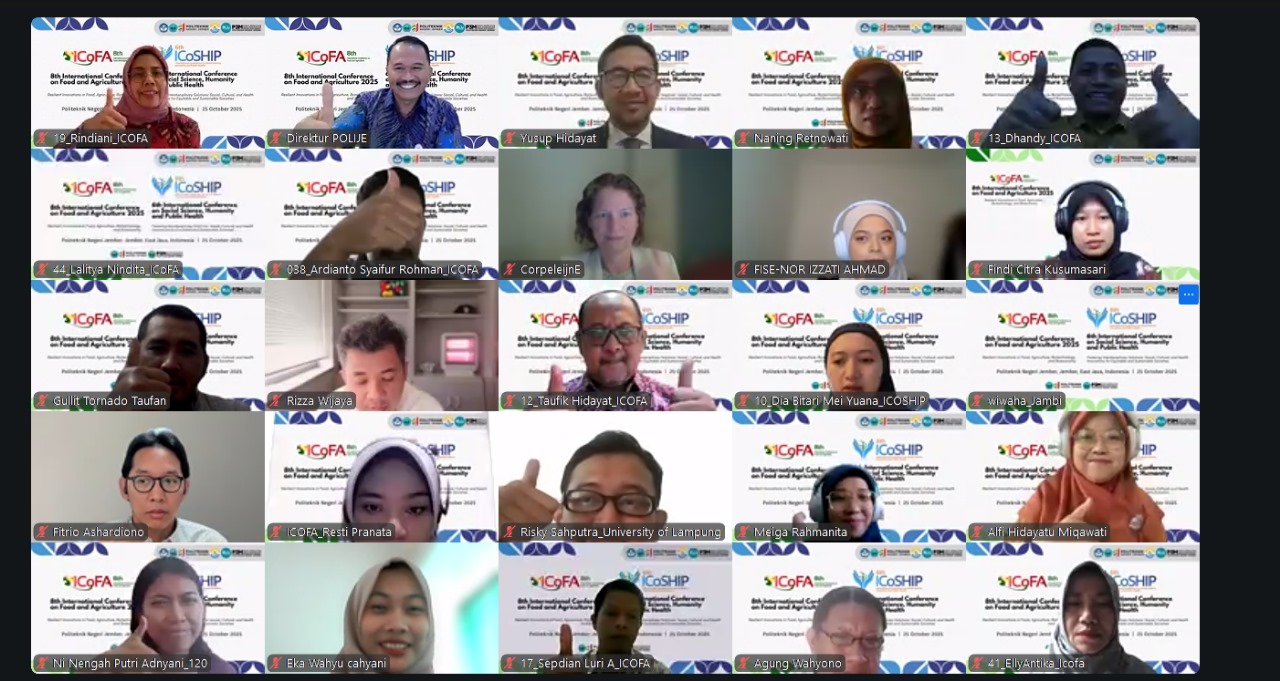
Politeknik Negeri Jember (Polije) recently held a major international conference aimed at advancing innovation in the food sector and addressing social challenges. The event brought together scholars, industry practitioners and policy-makers from Indonesia and abroad to exchange knowledge, present research and explore solutions for sustainable development in food systems and society.
The conference theme centred on harnessing modern technology and social innovation to meet pressing global demands—such as food security, nutrition, community welfare and inclusive growth—while also aligning with Polije’s strategic vision of applied vocational education with global relevance.
Over the course of several sessions, participants delivered keynote speeches, presented papers and engaged in panel discussions that addressed topics including novel food processing, value-chain innovation, community-based social entrepreneurship and the role of vocational institutions in societal transformation. Interactive workshops encouraged collaboration across disciplines and fostered international dialogue on best practices.
Polije stressed that the conference was consistent with its vision to become a world-class vocational higher education institution excelling in agriculture, technology and entrepreneurship, and its mission to strengthen applied learning, foster innovation and build international partnerships. The event served as a platform to advance these institutional aims by connecting its communities with global networks.
One focus area was how vocational institutions like Polije can act as catalysts for change—not only educating students but also directly contributing to regional development through innovation in food systems and social enterprise. The conference highlighted case studies of how applied research and hands-on training can translate into real-world impact.
The international dimension of the conference underscored Polije’s commitment to globalisation: cross-border collaboration, foreign academic participation, opportunities for student and lecturer mobility, and international standard benchmarking were all on the agenda. The institution sees such engagement as key to raising its reputation and enhancing the competitiveness of its graduates.
Administrators of Polije emphasized that such events strengthen institutional reputation, open doors to further collaborations with overseas universities and organisations, and support its goal of becoming a hub for vocational excellence in Southeast Asia. Participants expressed optimism that the outcomes would feed into future joint research, internships and educational programmes.
In summation, the international conference at Polije was more than a gathering of ideas—it signalled the institution’s ambition to link innovation in food and social spheres with its educational mandate, to build global-ready graduates, and to contribute meaningfully to society. Through this effort, Polije demonstrates how a vocational campus can transcend boundaries and lead in addressing critical challenges of our time.