
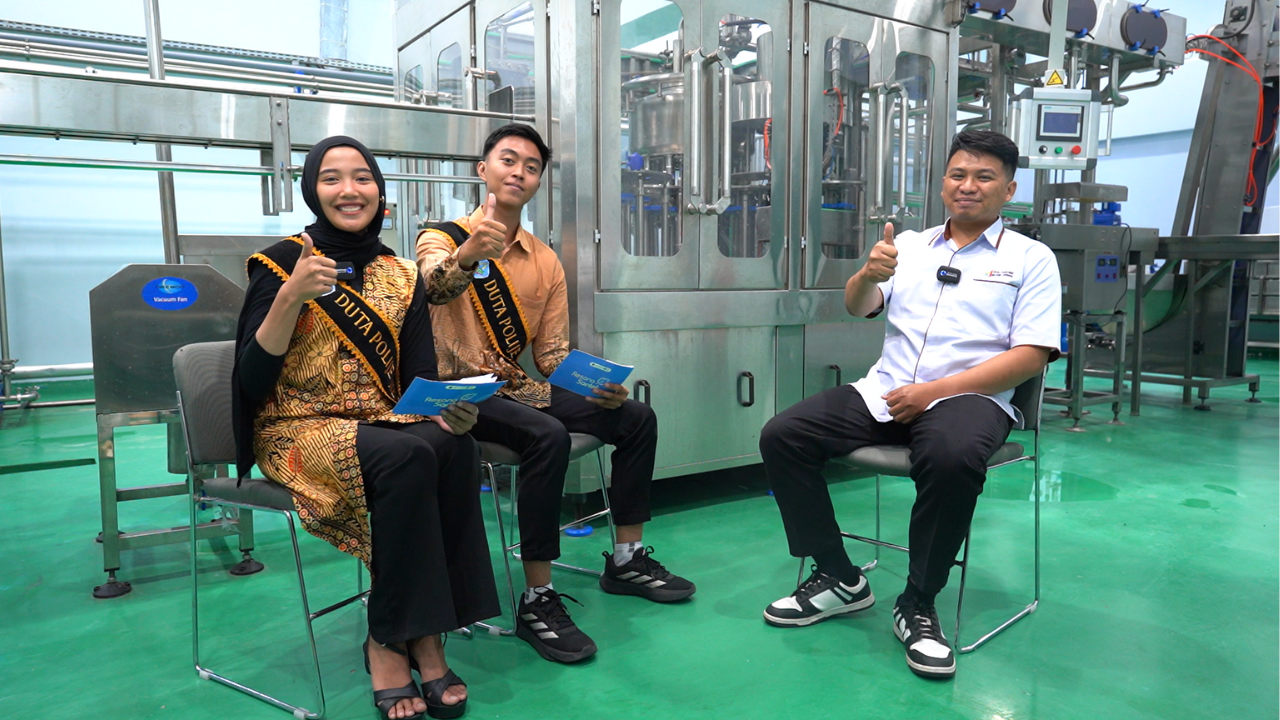
Jember – At the heart of the agricultural innovation agenda of Politeknik Negeri Jember (Polije) lies the Teaching Factory (TEFA) Milk initiative, where fresh milk is processed using state-of-the-art industrial equipment. This practical framework enables students to gain hands-on experience with modern dairy technology while the institution advances its role as a globally competitive vocational campus.
The TEFA Milk facility showcases an integrated production line—from milk reception, pasteurisation, homogenisation, filling, to packaging—using advanced machinery that meets industry benchmarks. By exposing students to real-world equipment and workflows, Polije bridges the gap between academic theory and commercial-scale dairy production.
Polije’s vision is to become a world-class vocational higher education institution that excels in agriculture, technology and entrepreneurship, and its mission includes strengthening applied learning, fostering innovation, and building partnerships with industry and international institutions. Through TEFA Milk, this vision and mission come alive: students engage in actual manufacturing environments, staff collaborate with industry, and research translates into operational practice.
In line with its internationalisation agenda, Polije has integrated global standards into the TEFA Milk facility: quality management practices, hygiene and safety protocols, and equipment sourcing and operation reflect international dairy industry norms. This helps prepare graduates not just for the national workforce, but for cross-border careers in agribusiness and dairy production.
The choice to deploy modern processing equipment is strategic: it allows Polije to maintain product quality, reduce contamination risks, optimise throughput, and produce dairy goods suitable for both local consumption and broader markets. Moreover, the operational data and process flows emerging from the facility offer opportunities for applied research, student projects and international academic collaboration.
By combining advanced technology with vocational training, Polije reinforces its identity as a teaching-factory campus where learning, production and research occur simultaneously. Students from the Department of Animal Husbandry and other related programs participate directly in the TEFA Milk operations, gaining competencies in equipment operation, process control, quality assurance, packaging and supply-chain logistics.
Polije’s commitment to internationalisation is further evidenced by its intent to host visiting scholars, student exchanges, and joint projects around the TEFA Milk platform. Through sharing best practices and forming institutional links abroad, Polije strengthens its global network, enhances its reputation, and opens pathways for graduate mobility.
In sum, the TEFA Milk modern-equipment initiative at Polije is more than a facility—it is a strategic instrument for fulfilling the institution’s vision and mission. By delivering applied vocational education grounded in modern industry standards and global engagement, Polije advances its promise to educate professionals ready to innovate, compete and lead in the global agricultural and dairy sectors.