
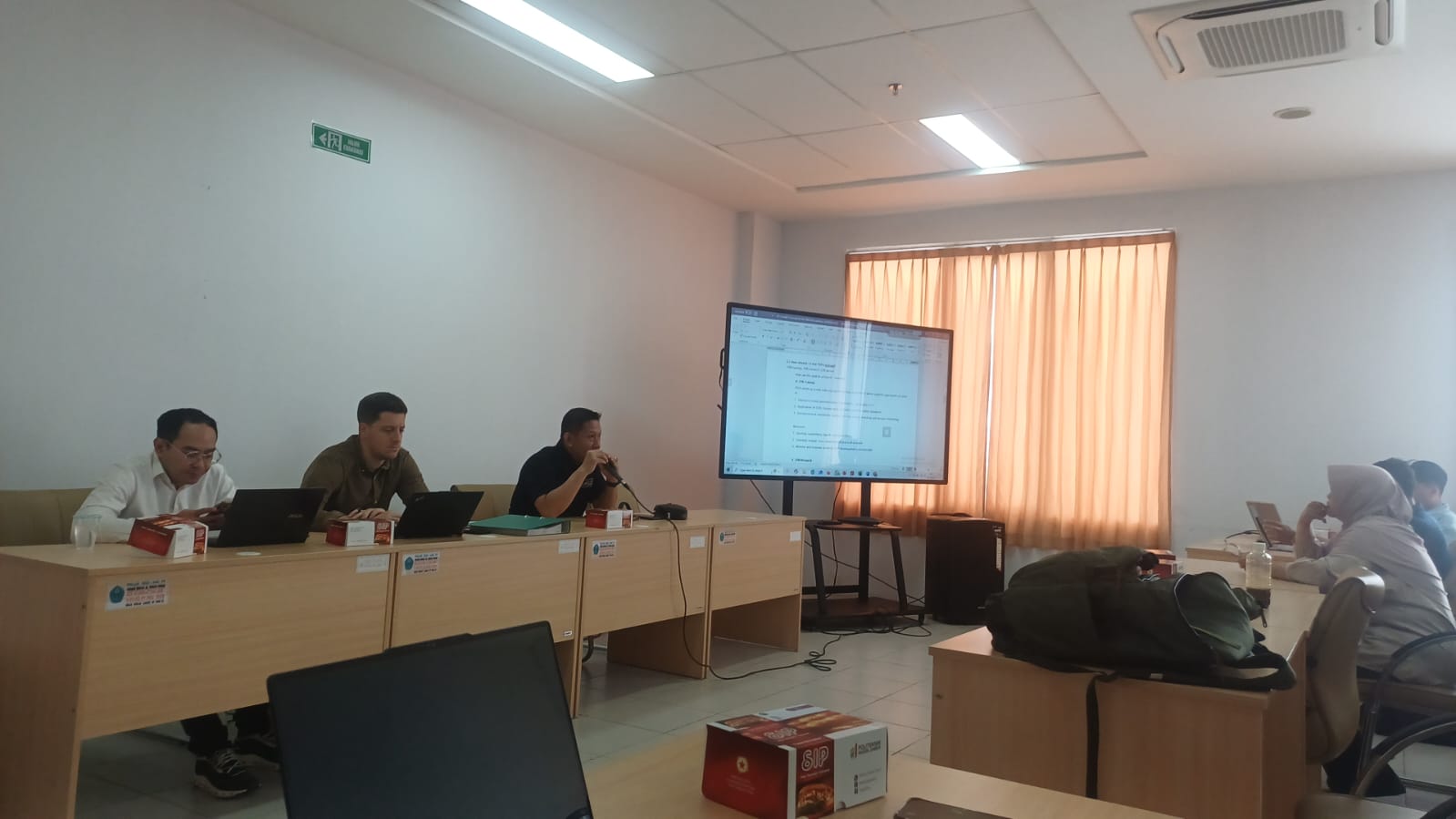
The afternoon session of the second workshop day at Politeknik Negeri Jember (POLIJE) turned its attention to the development of Standard Operating Procedures (SOPs) for pasteurized milk production. Building on the morning’s hands-on activities, this session highlighted the importance of written guidelines to ensure consistency, safety, and quality in every stage of the process. Led by POLIJE teachers and supported by consultants from Skills for Competitiveness (S4C), the session was both technical and strategic in nature.
Participants were carefully guided through the systematic drafting of SOPs, covering the entire production chain from raw material selection to the packaging of the final product. Each step was discussed in detail to ensure that the procedures aligned with both local industry practices and international standards. Teachers emphasized that hygiene, safety protocols, and product testing procedures must be central to the documentation.
The presence of S4C experts brought an added layer of insight to the session. Drawing on Swiss expertise, the consultants introduced international benchmarks and best practices in dairy production. This sparked productive discussions among participants on how POLIJE could adapt these global standards to the Indonesian context while maintaining practicality and efficiency.
For POLIJE educators, the exercise in SOP drafting was more than a classroom activity—it was a strategic move toward strengthening the institution’s teaching factory (TEFA) model. They stressed that SOPs are not only valuable teaching materials but also essential tools for ensuring quality assurance, supporting certification processes, and building credibility with industry partners.
Participants actively engaged in group work, drafting their own SOPs under the guidance of teachers and consultants. By the end of the session, each group presented their drafts and received immediate feedback, which helped refine the documents into practical tools ready for future implementation. This interactive approach underscored the workshop’s balance of academic rigor and applied industry training.
The activity also highlighted POLIJE’s broader mission to integrate vocational education with industrial relevance. By instilling in both teachers and students the discipline of following clear, standardized procedures, POLIJE is laying the groundwork for graduates who can thrive in competitive industries that demand consistency and accountability.
Moreover, this collaborative development of SOPs illustrates POLIJE’s commitment to aligning itself with international best practices while still tailoring approaches to local needs. The institution’s willingness to learn, adapt, and innovate reflects its long-term strategy of positioning itself as a polytechnic of excellence, not only within Indonesia but also at the global level.
As the session concluded, participants left with tangible outputs in the form of draft SOPs and a deeper understanding of quality assurance principles. More importantly, the exercise reinforced POLIJE’s dedication to bridging academic knowledge with real-world practices—an essential step in its journey to become a leading polytechnic and a benchmark for vocational education in Southeast Asia.