

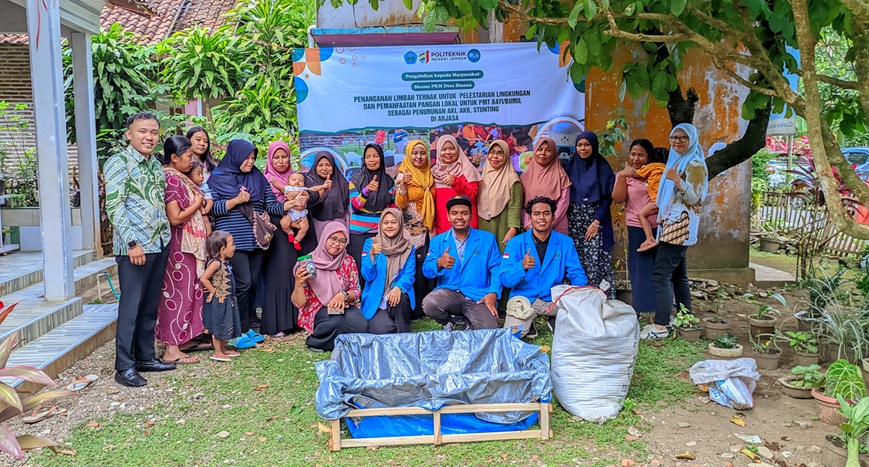
In a groundbreaking approach to sustainable development, Arjasa District has successfully implemented an integrated program that simultaneously tackles environmental pollution and childhood stunting.
The initiative transforms livestock waste into economic opportunity while leveraging local food sources to combat malnutrition, creating a model for community-driven solutions to interconnected health and environmental challenges.
The program addresses environmental concerns through simple yet effective technology.
“Through vermicomposting, livestock waste no longer pollutes the environment but instead produces quality organic fertilizer and worms as protein sources for animal feed,” explained Dr. Mira Andriani, S.Pt., M.P., highlighting the circular economy approach that converts pollution into valuable agricultural inputs.
On the nutrition front, the initiative maximizes local food potential to fight stunting.
“We optimize local ingredients like iron-rich moringa leaves, vitamin A-packed sweet potatoes, and corn as carbohydrate sources to create nutritious foods,” stated Muhammad Abdul Rauf, M.Gz. The program has developed practical nutritional solutions including moringa biscuits and snakehead fish nuggets to address dietary deficiencies.
Women have emerged as crucial change agents in the program, with PKK mothers and posyandu cadres leading implementation efforts.
“These women are not just beneficiaries but active drivers of community change,” Rauf emphasized, noting their pivotal role in producing nutritious foods and managing organic fertilizer production.
Village government support has been instrumental in scaling the initiative. “We see this program as a long-term investment in building a healthy community and clean environment,” said Village Head Wasiah, whose administration has facilitated infrastructure and ongoing mentoring. The Arjasa model has now attracted attention from neighboring regions seeking to replicate its success in creating self-reliant communities capable of managing both environmental and nutritional challenges.