

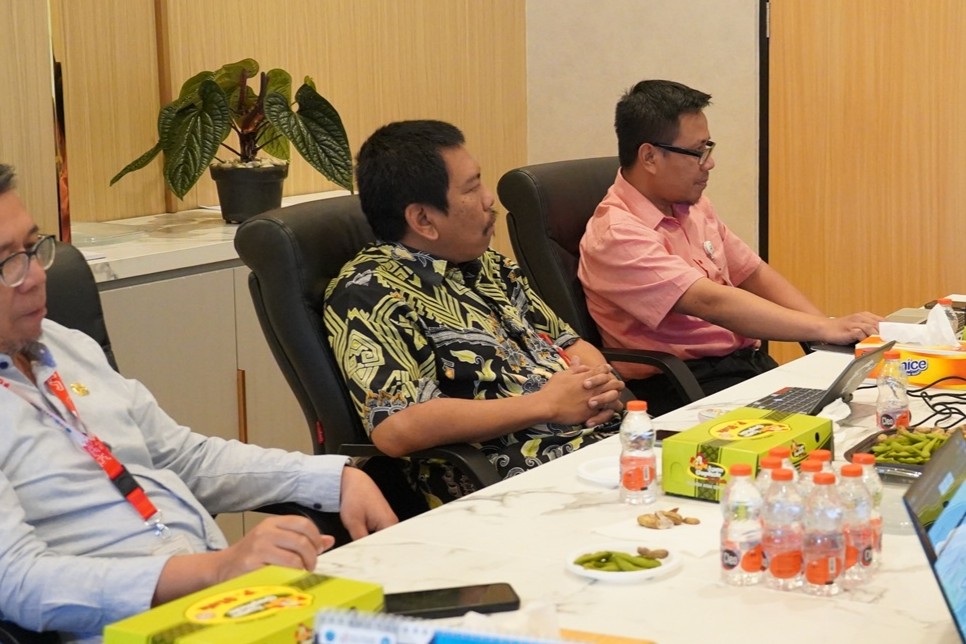
The leadership of Politeknik Negeri Jember (Polije) and Swisscontact’s Skills for Competitiveness (SS4C) program convened a focused session to discuss the strategic development of the Teaching Factory (TEFA) within the 2026–2027 cooperation framework.
The meeting was attended by key representatives from both institutions, including Kiki Hendarin, Agung Wahyono, Ph.D., and Dr. Yossi Wibisono, S.TP., MP.
During the deliberation, TEFA’s role as a center for applied learning was reaffirmed as a major institutional priority. Discussions emphasized the enhancement of TEFA’s operational model, including governance structures, staffing arrangements, and alignment with industry standards.
Polije’s leadership stated that this TEFA development represents the institution’s commitment to making Polije a national model for applied polytechnic education.
“Polije reaffirms its commitment to advancing TEFA as a national model for applied polytechnic education, strengthening our position as a benchmark for high-quality vocational training in Indonesia,” stated Polije Leadership.
The Dairy Processing TEFA was highlighted as a flagship model, representing Polije’s strong reputation in the agricultural and food technology sectors. Planned improvements include facility upgrades and the refinement of teaching modules to reflect international vocational education standards.
SS4C representatives underscored that excellence in TEFA implementation significantly contributes to student competency, graduate employability, and industry relevance. Kiki Hendarin (Deputy Program Manager SS4C) affirmed TEFA’s role as a central pillar of the JAP 2026-2027.
“Excellence in TEFA implementation is crucial for student competency, graduate employability, and industry relevance. Therefore, TEFA will remain a central pillar within the JAP 2026–2027, ensuring a focus on sustainability and digitalization,” explained Kiki Hendarin.
Both institutions agreed that advancing TEFA must integrate principles of sustainability, digital innovation, and skills aligned with future labor market demands. The session concluded with mutual agreement on key action points to be formalized under the JAP.