

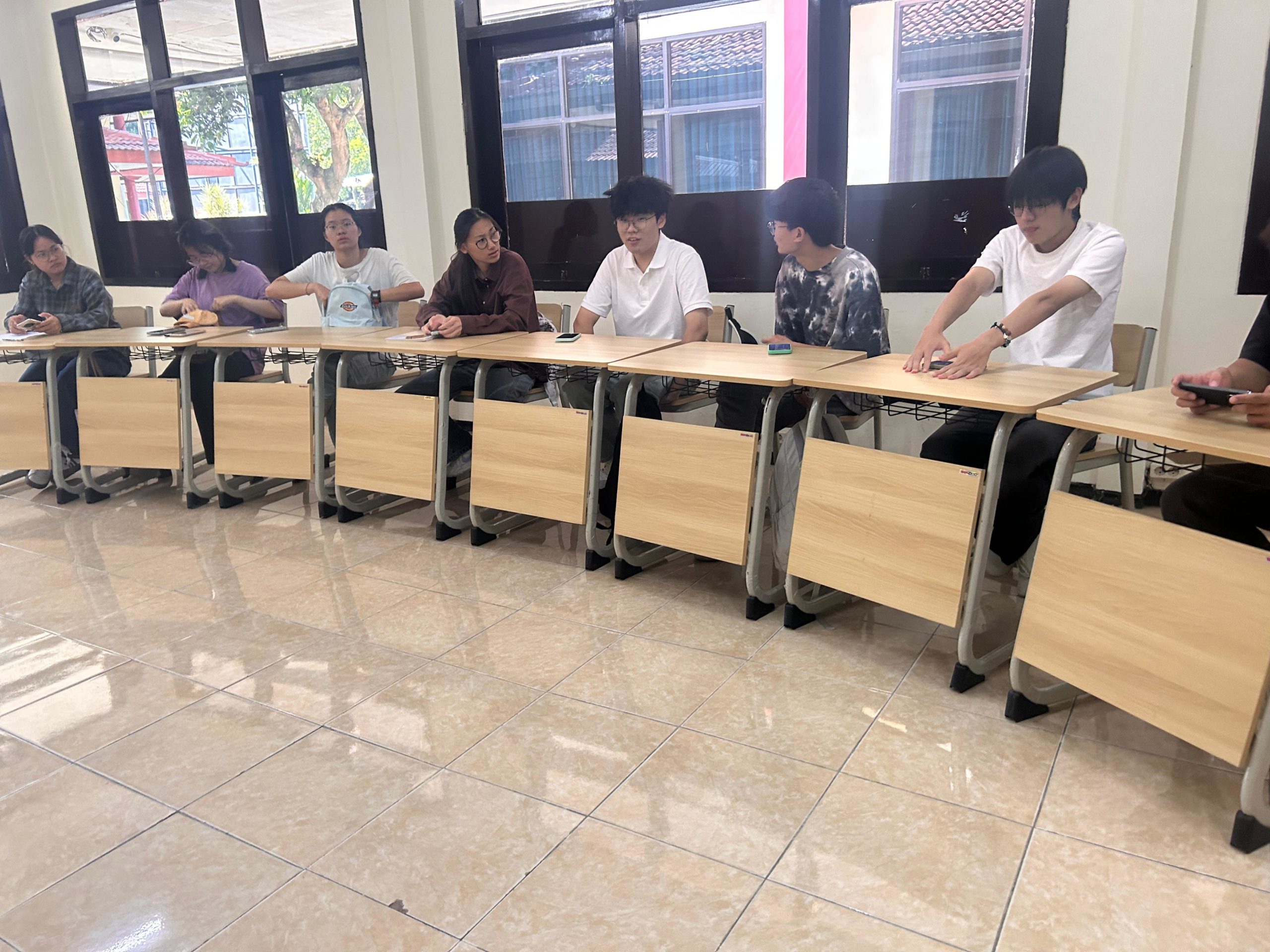
Eight international students from Jiangsu Agri-Animal Husbandry Vocational College (JSAHVC), China, participated in a Research Design class held by the Department of Animal Husbandry at Politeknik Negeri Jember (Polije). The session was guided by Mrs. Rizki Amalia, Coordinator of the Livestock Study Program, and aimed to strengthen students’ understanding of scientific research methods in the livestock field.
This academic activity is part of the student exchange and learning collaboration between Polije and JSAHVC, which focuses on applied agricultural and livestock sciences. The course provided students with theoretical and practical exposure to designing scientific research, identifying variables, and formulating research objectives and methodologies relevant to animal husbandry.
Throughout the session, the international students learned about research design structures commonly used in agricultural studies, such as experimental, survey, and case study methods. They also explored how to develop research proposals, determine sampling techniques, and analyze data to produce scientifically valid conclusions.
Mrs. Rizki Amalia expressed her appreciation for the students’ enthusiasm and active participation during the class. She emphasized that this international learning activity not only builds academic competence but also promotes cross-cultural exchange and collaboration in agricultural research between Indonesia and China.
The involvement of JSAHVC students in Polije’s Research Design class also reflects Polije’s commitment to internationalization and academic excellence. By integrating foreign students into its curriculum, Polije demonstrates its capacity to provide globally relevant learning experiences aligned with international vocational education standards.
Vice Director for Collaboration Affairs, Agung Wahyono, Ph.D., stated that this activity strengthens Polije’s partnership with JSAHVC and contributes to the institution’s vision of becoming a world-class vocational higher education institution. Through such programs, students gain exposure to international research practices and develop skills needed to contribute to global agricultural innovation.
The collaboration also enhances the academic environment at Polije, encouraging both local and foreign students to engage in critical thinking and applied research. This interaction fosters mutual understanding, broadens perspectives, and creates opportunities for future joint research projects between the two institutions.
With the success of this activity, Polije continues to advance its mission of integrating education, research, and international collaboration. The Research Design class not only strengthens the academic foundation of the participating students but also marks another important step in Polije’s journey toward global engagement and excellence in vocational education.