

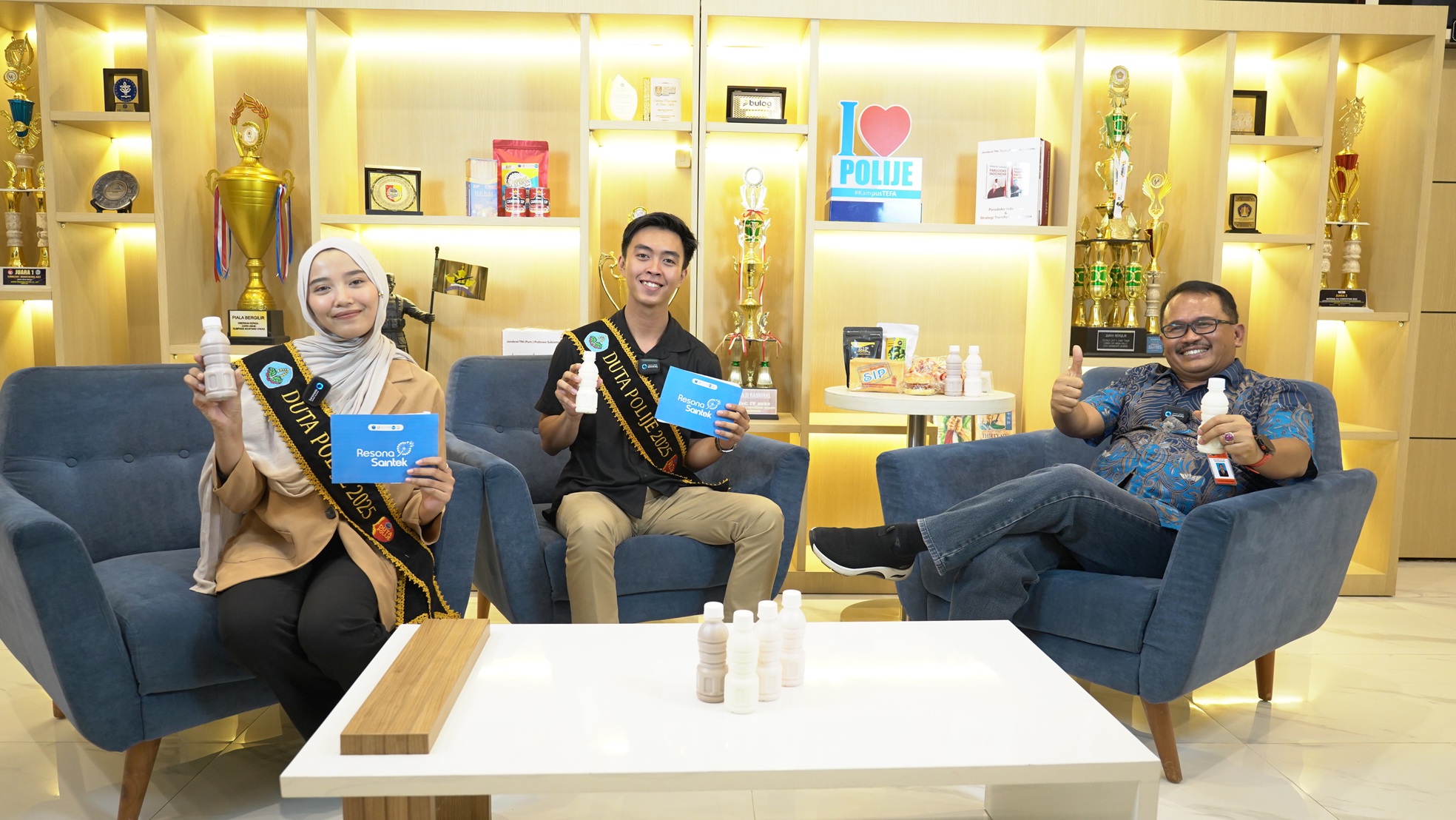
Politeknik Negeri Jember (Polije) continues to strengthen its role in advancing national food security through the innovation of its Teaching Factory (TEFA) Milk. The initiative combines practical learning, research, and industry collaboration to produce high-quality dairy products while preparing students to become professionals who can contribute to sustainable agricultural development.
TEFA Milk serves as an integrated learning platform where students are directly involved in the entire production process—from feed formulation, livestock maintenance, and milk collection to pasteurization, packaging, and product marketing. This end-to-end system not only supports applied learning but also ensures the production of fresh milk that meets hygiene and nutritional standards, aligning with global food quality benchmarks.
Through continuous innovation, TEFA Milk has successfully increased productivity and efficiency in milk processing. The program implements modern technology, quality management systems, and business analysis to ensure sustainable production while maintaining product consistency. These innovations reflect Polije’s strong commitment to advancing the agricultural and livestock sectors in response to growing national and global food challenges.
Polije’s leadership emphasizes that the TEFA Milk innovation aligns with the institution’s vision to become a world-class vocational higher education institution that excels in agriculture, technology, and entrepreneurship. Its mission includes strengthening applied learning, fostering innovation, and building partnerships with industry and international institutions to enhance graduates’ global competitiveness.
International collaboration has become one of the key indicators of Polije’s success in implementing its vision. Through partnerships with universities and organizations abroad, Polije has integrated international standards into its curriculum and practices. TEFA Milk has also received international attention as a model for vocational excellence, positioning Polije as a reference institution for applied agricultural learning in Southeast Asia.
Vice Director for Collaboration Affairs, Agung Wahyono, Ph.D., stated that the implementation of TEFA-based learning with an international dimension not only provides students with practical experience but also exposes them to global best practices. This ensures that Polije graduates are equipped with both technical expertise and cross-cultural understanding needed in the international job market.
In addition to supporting academic excellence, the TEFA Milk program also contributes to community welfare by supplying high-quality dairy products that enhance local nutrition and promote sustainable economic growth. By linking education, production, and social impact, Polije demonstrates that vocational institutions can play a strategic role in achieving food security and regional development.
Looking ahead, Polije is committed to further expanding TEFA Milk innovations and strengthening international cooperation networks. Through global collaboration, applied research, and sustainable practices, Polije continues to move toward its vision of becoming a globally competitive, innovation-driven, and community-oriented vocational institution that contributes significantly to food security and agricultural advancement.