

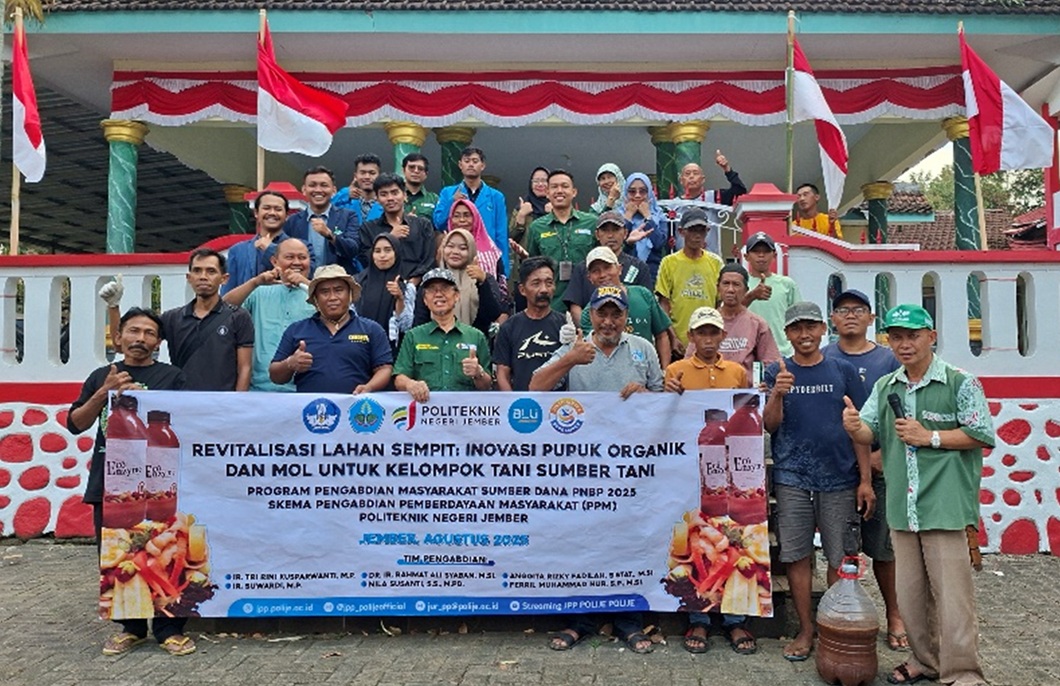
Farmers in Arjasa Village have begun adopting eco-enzyme as a sustainable alternative to chemical fertilizers, responding to soaring prices and limited availability of subsidized fertilizers that have long hindered agricultural productivity. This organic approach utilizes fermented fruit and vegetable waste to create effective farming solutions.
“Active enzymes in eco-enzyme not only accelerate organic material decomposition in soil but also function as natural fertilizer that doesn’t harm the environment,” explained Ir. Tri Rini Kusparwanti, M.P., training program coordinator. The liquid is produced through simple fermentation of organic kitchen waste.
According to Aprianto, head of Sumber Tani Farmers Group, positive changes appeared immediately after application. “Soil structure became looser and more fertile, chili plants grew faster, and tobacco leaves appeared broader, while production costs significantly decreased,” he reported.
The participatory training method enabled farmers to easily understand and practice eco-enzyme production. Beyond soil fertility improvement, the program focuses on developing farmer independence in waste management and sustainable agricultural practices.
Several farmers now plan to develop small-scale organic fertilizer businesses, with expansion preparations underway to meet internal needs and potential market opportunities. This innovation offers a replicable model for regions facing similar fertilizer availability challenges.