

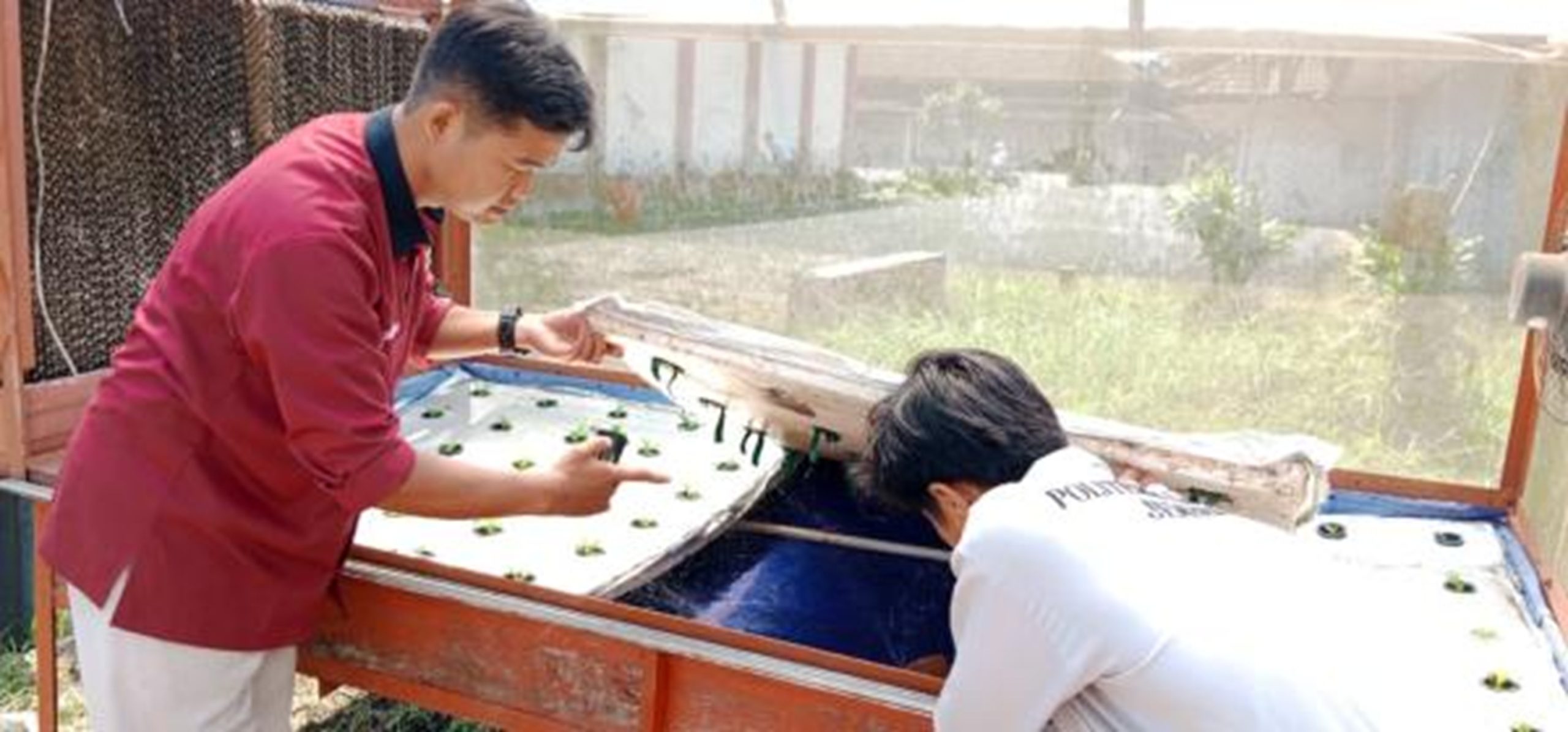
In a significant stride toward sustainable agriculture, students from Jember State Polytechnic (Polije) have developed an Internet of Things (IoT)-based system to detect blockages in aeroponic installations. This innovation addresses a critical challenge in modern farming systems and contributes to global food security efforts through precision agriculture technology.
The research project, titled “Design and Implementation of an IoT-Based Automatic Blockage Detection System for Greenhouses with Aeroponic Installations,” was led by Dimas Sujono Putro along with six students from the Water Management Engineering Laboratory.
Conducted from July to November 2025 with 10 million Rupiah in university funding, the project represents Indonesia’s growing contribution to agricultural technology innovation.
“Aeroponics excels in water efficiency and accelerated plant growth,” Dimas explained, “but nozzle clogging often causes crop failures. This automatic detection system prevents problems at an early stage.”
The innovative device utilizes clog sensors and ESP32 microcontrollers integrated with the Blynk application platform. When nutrient flow is disrupted, the system sends a “Nutrient Clog Detected” notification to smartphones or computers within an average response time of 2.5 seconds. Testing demonstrated 70-80% detection accuracy with stable pressure maintenance at 0.2 bar, while lettuce harvests accelerated to 28 days with average weights of 100-200 grams per plant.
Team member Audina Uffila Dewi highlighted the project’s educational value, stating, “This innovation serves not only as a technical solution but also as a learning platform for students to understand sensor systems, IoT technology, and precision agriculture applications.”
The system’s successful implementation provides hands-on experience in developing smart farming technologies relevant to global agricultural challenges.
Looking ahead, the team plans cloud system integration, industrial greenhouse applications, and patent registration. Their vision includes developing the technology into both educational kits and commercial products, potentially revolutionizing aeroponic farming practices worldwide.
By preventing crop failures through early detection, this IoT innovation represents a promising advancement in sustainable agricultural practices that could benefit farming communities globally.