

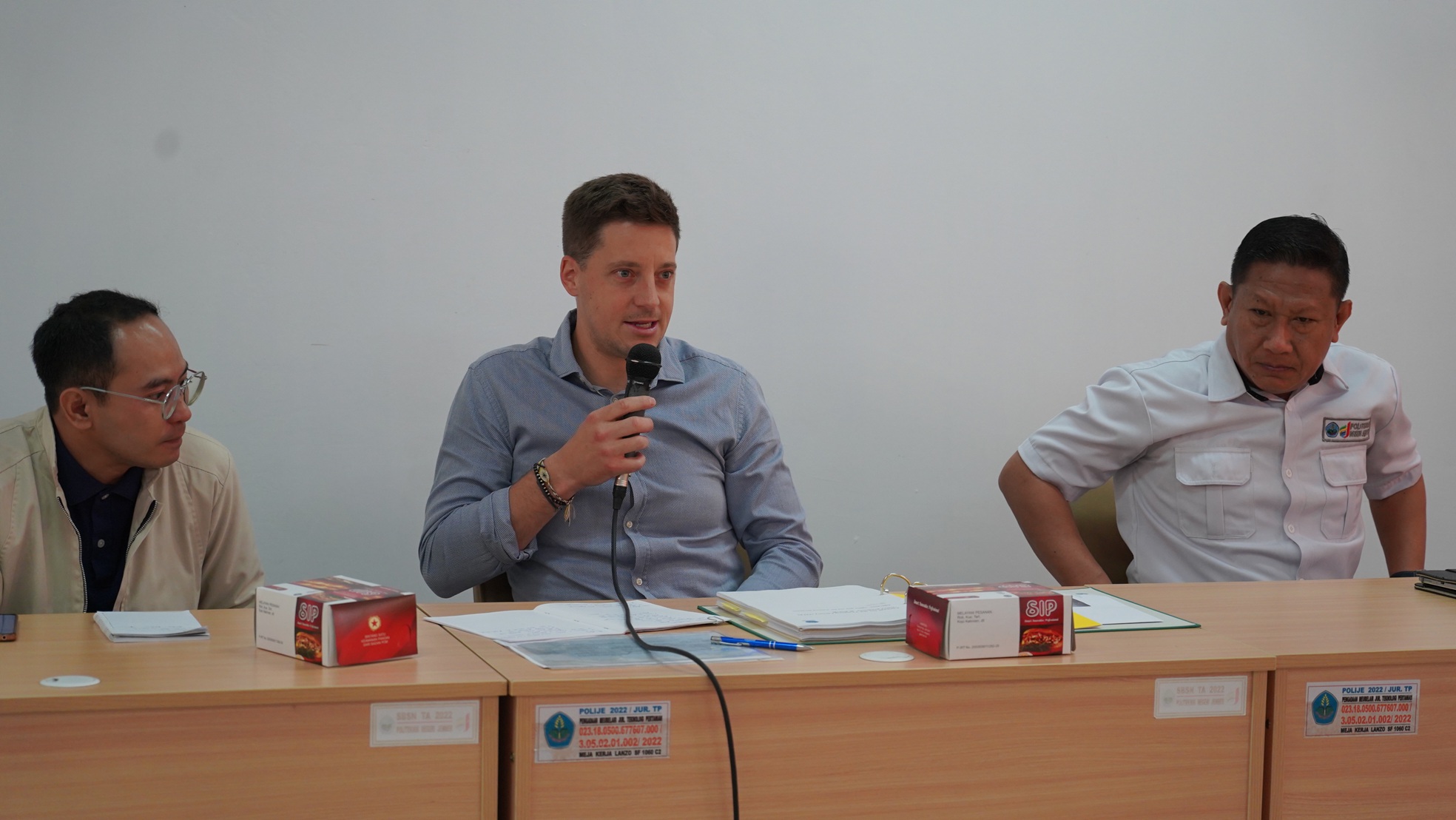
The final session of the second day at Politeknik Negeri Jember (POLIJE) provided a platform for reflection, bringing together insights from both the morning’s problem-based learning (PBL) activity on pasteurized milk production and the afternoon’s workshop on Standard Operating Procedures (SOPs). Conducted in an open discussion format, the session allowed participants to share their experiences, challenges, and key takeaways, creating a collective space for learning and growth.
POLIJE teachers expressed their satisfaction with the high level of engagement throughout the day. They emphasized that the collaborative spirit displayed by participants reinforced the importance of teamwork in laboratory-based learning. According to the teachers, such collaboration mirrors real-world industry practices, where success depends on coordination, discipline, and the ability to apply knowledge in practical settings.
The consultants from Skills for Competitiveness (S4C) underscored the significance of reflection as a vital part of the learning cycle. They highlighted that feedback collected during the session would not only help refine future workshops but also ensure that lesson plans remain relevant and aligned with international standards. Their perspective reinforced the idea that innovation in teaching must be continuously evaluated and improved.
Participants actively contributed to the discussion, sharing their impressions of the day’s activities. Many expressed that they felt more confident in applying SOPs in their respective contexts, whether in teaching environments or industrial applications. The combination of practical demonstrations and theoretical frameworks was particularly appreciated, as it provided a balanced and holistic learning experience.
Teachers also noted that reflection sessions like this strengthen the culture of critical thinking and self-improvement within POLIJE’s academic environment. By encouraging both educators and participants to voice their perspectives, the institution fosters an atmosphere of openness, collaboration, and continuous growth.
The reflective discussion further emphasized POLIJE’s mission of integrating academic rigor with industry relevance. By embedding reflection into its workshops, POLIJE ensures that learning goes beyond technical skill-building, extending into the development of soft skills such as communication, problem-solving, and adaptability—competencies essential for future professionals.
This session also aligned with POLIJE’s broader ambition of becoming a leading polytechnic in Indonesia. By cultivating a culture of reflective practice, engaging with international partners, and maintaining a strong connection to industry standards, the institution continues to set benchmarks for excellence in vocational and applied education.
As the session concluded, participants were encouraged to carry forward the knowledge gained and apply it in their professional roles. With strengthened confidence and new perspectives, they left the room not only with technical expertise but also with a deeper sense of POLIJE’s vision: to prepare graduates who are globally competitive and capable of shaping the future of their industries.