

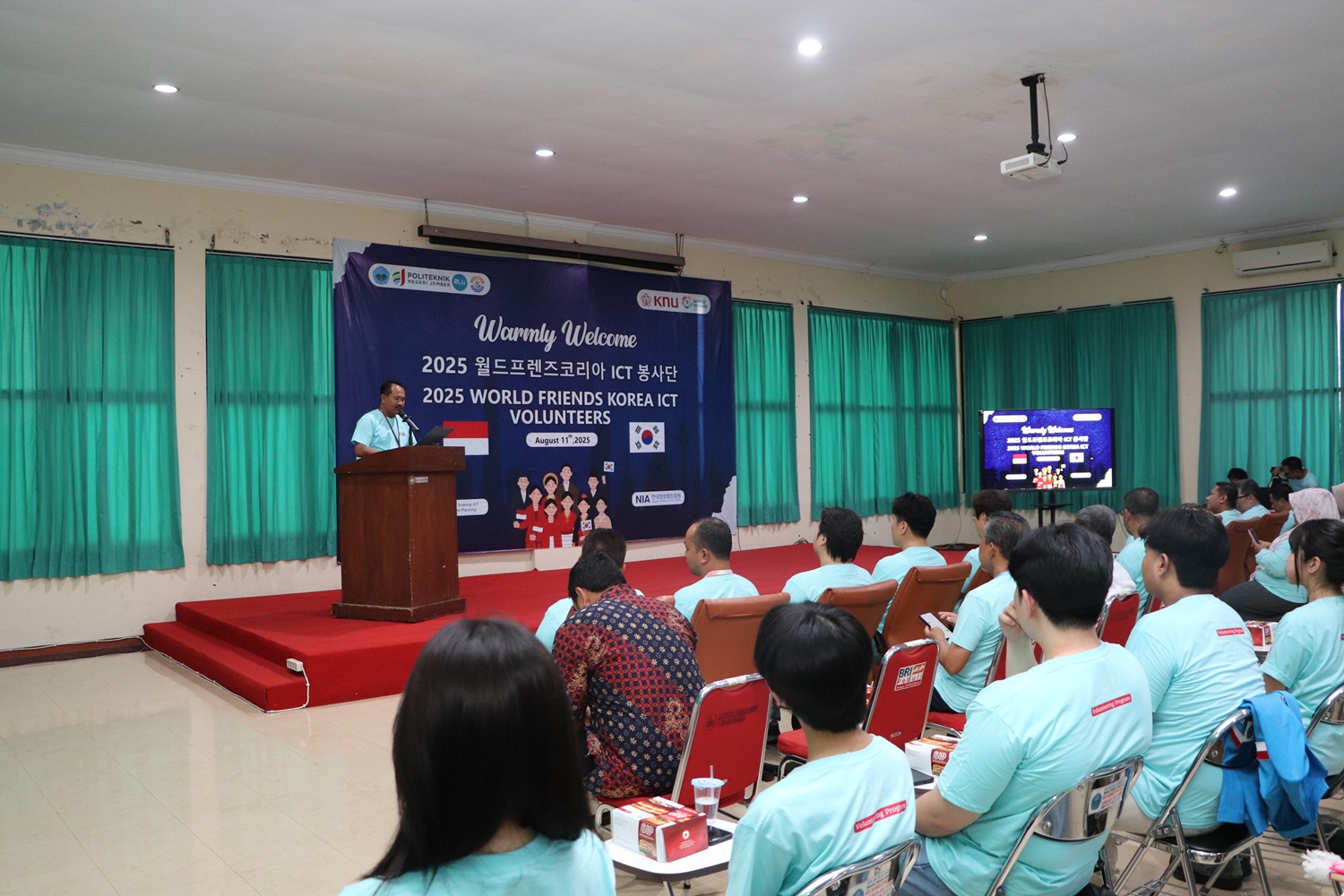
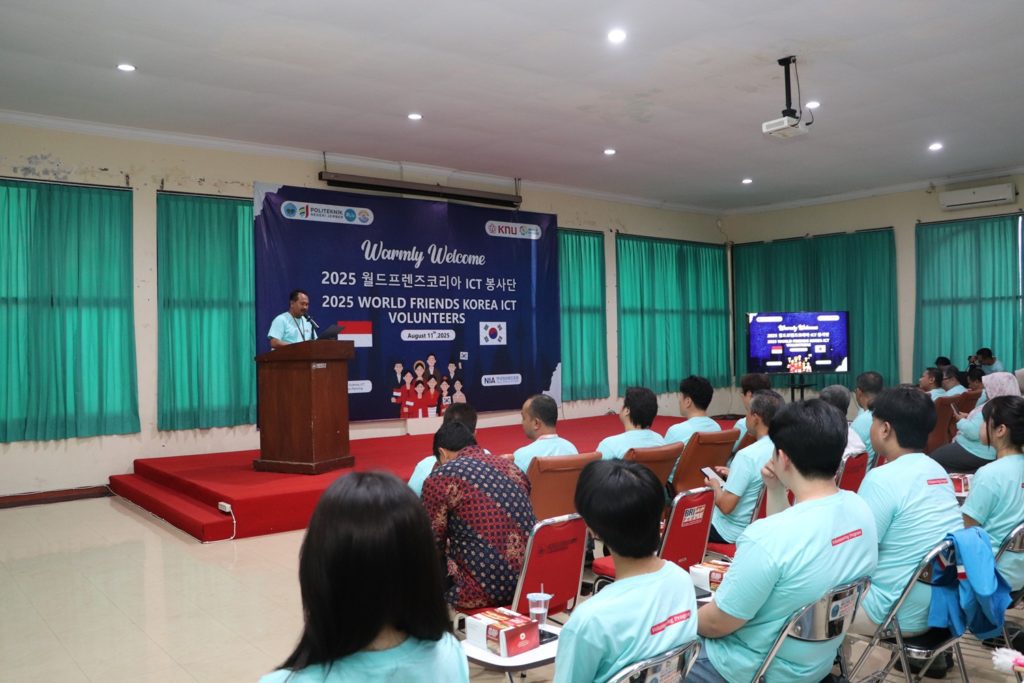
Politeknik Negeri Jember (Polije) and Kyungpook National University (KNU), South Korea, have once again reinforced their strategic partnership through the ongoing World Friends Korea – ICT (WFK-ICT) Volunteers Program—an international collaboration that has been running for more than five years. This year’s edition of WFK-ICT emphasizes not only technological development but also rich cultural exchange and the cultivation of enduring cooperative networks.
The program features a Project-Based Learning (PBL) framework, where approximately 30 students from the Department of Information Technology at both Polije and KNU collaborate to design and develop applications intended to support the advancement of both institutions. As the Director of Polije, Saiful Anwar, S.TP., M.P., stated, “This activity is not merely a platform for technological learning, but also a chance to create tangible solutions that can bring positive outcomes to both campuses. We hope these projects will continue to strengthen our longstanding relationship,” highlighting the dual goal of innovation and real-world impact.
From KNU’s side, Prof. Jeong Hong Kim emphasized the value of continuity in this partnership. He highlighted that WFK-ICT offers profound benefits—from building cross-cultural understanding to enhancing technological skills. “This collaboration provides a highly valuable experience. Students not only master technology but also learn to appreciate cultural differences. This year, we have placed special emphasis on cultural integration through creative student performances,” he added, underscoring the program’s cultural dimension alongside the technical goals.
A KNU student, Hyerim Park, also shared her enthusiasm: “Through this program, we can collaborate, exchange ideas, and get to know each other’s cultures. We hope this relationship continues to grow and develop,” indicating that the exchange has fostered not only academic collaboration but also meaningful friendships.
This year, WFK-ICT stands out for its stronger focus on cultural integration. In addition to working together on technology projects, students prepared cultural performances to further foster appreciation of the arts and deepen bonds between Indonesian and South Korean participants.
With robust support from both institutions, Polije and KNU are optimistic about the trajectory of their collaboration. They aim to continue advancing international cooperation that successfully blends technological innovation with cultural preservation.