

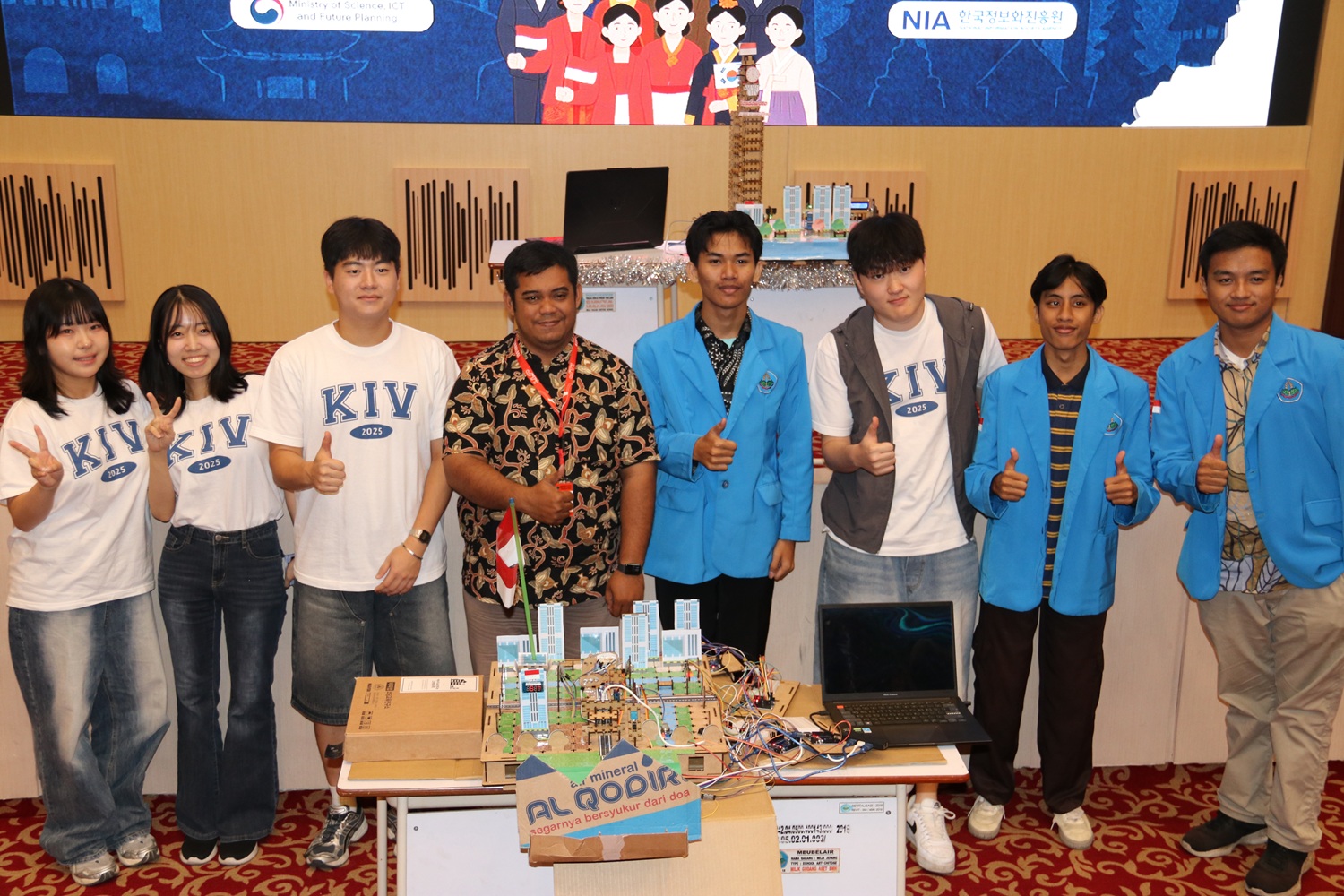
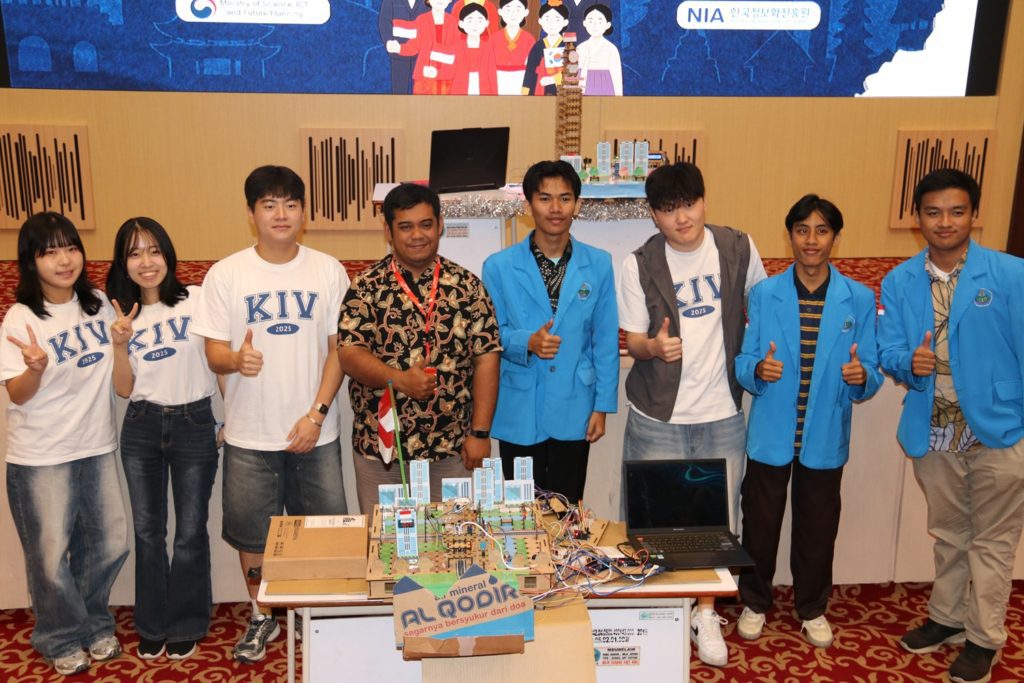
Continuing the spirit of international collaboration under the 2025 World Friends Korea-ICT Volunteering Program (WFK-ICT), students from Kyungpook National University (KNU), South Korea, and Politeknik Negeri Jember (POLIJE), Indonesia, have developed a groundbreaking project named AUSOWOSO. This initiative highlights the synergy of cross-border academic teamwork in addressing urban challenges in Bondowoso through smart technology solutions.
The project is documented through an interactive GitHub platform, showcasing the technical development and progress of the AUSOWOSO system. This digital approach reflects the team’s commitment to transparency, accessibility, and open-source collaboration, allowing other developers and stakeholders to review, learn, and expand upon their work.
AUSOWOSO focuses on enhancing urban sustainability, safety, and digital connectivity. Although the project’s main theme revolves around Bondowoso’s smart city concept, it emphasizes a modern integration of IoT-based applications, software development, and community-driven digital tools that can be adapted for real-world use.
The multicultural team of Korean and Indonesian students applied a variety of ICT-based innovations. Their solutions integrate hardware components with digital platforms, enabling monitoring, analysis, and real-time response to urban challenges. The use of collaborative coding platforms such as GitHub also reflects the importance of global knowledge sharing in building resilient cities.
Through weeks of joint research, prototyping, and coding, the team worked on developing systems that could potentially improve public service delivery and urban infrastructure management. This includes addressing issues such as transportation flow, environmental monitoring, and digital information systems to benefit the Bondowoso community.
The AUSOWOSO project also highlights the role of interdisciplinary collaboration. Students from different academic backgrounds—ranging from engineering to information technology—were able to combine their skills, producing solutions that are not only technically feasible but also socially relevant. This reflects the WFK-ICT Program’s mission to foster innovation through diversity and global teamwork.
Beyond the technological output, the project fostered meaningful cross-cultural exchange. Indonesian and Korean students learned to navigate language, cultural differences, and teamwork dynamics while working toward a common goal. This cultural immersion further strengthened the partnership between KNU and POLIJE, aligning with POLIJE’s vision to become a globally recognized polytechnic.
The AUSOWOSO initiative demonstrates how student-led international collaborations can create sustainable impact for local communities. By combining open-source platforms, smart technology, and cultural collaboration, KNU and POLIJE have not only contributed to the smart city vision of Bondowoso but also set an example of how young innovators can drive positive global change. (rda)