


Politeknik Negeri Jember (Polije) is reinforcing its commitment to becoming a leading polytechnic in Asia by 2035 through continuous improvement in human resource capacity. In line with this vision, Polije has initiated a series of technical training programs that focus on building the competence of its academic and operational staff.
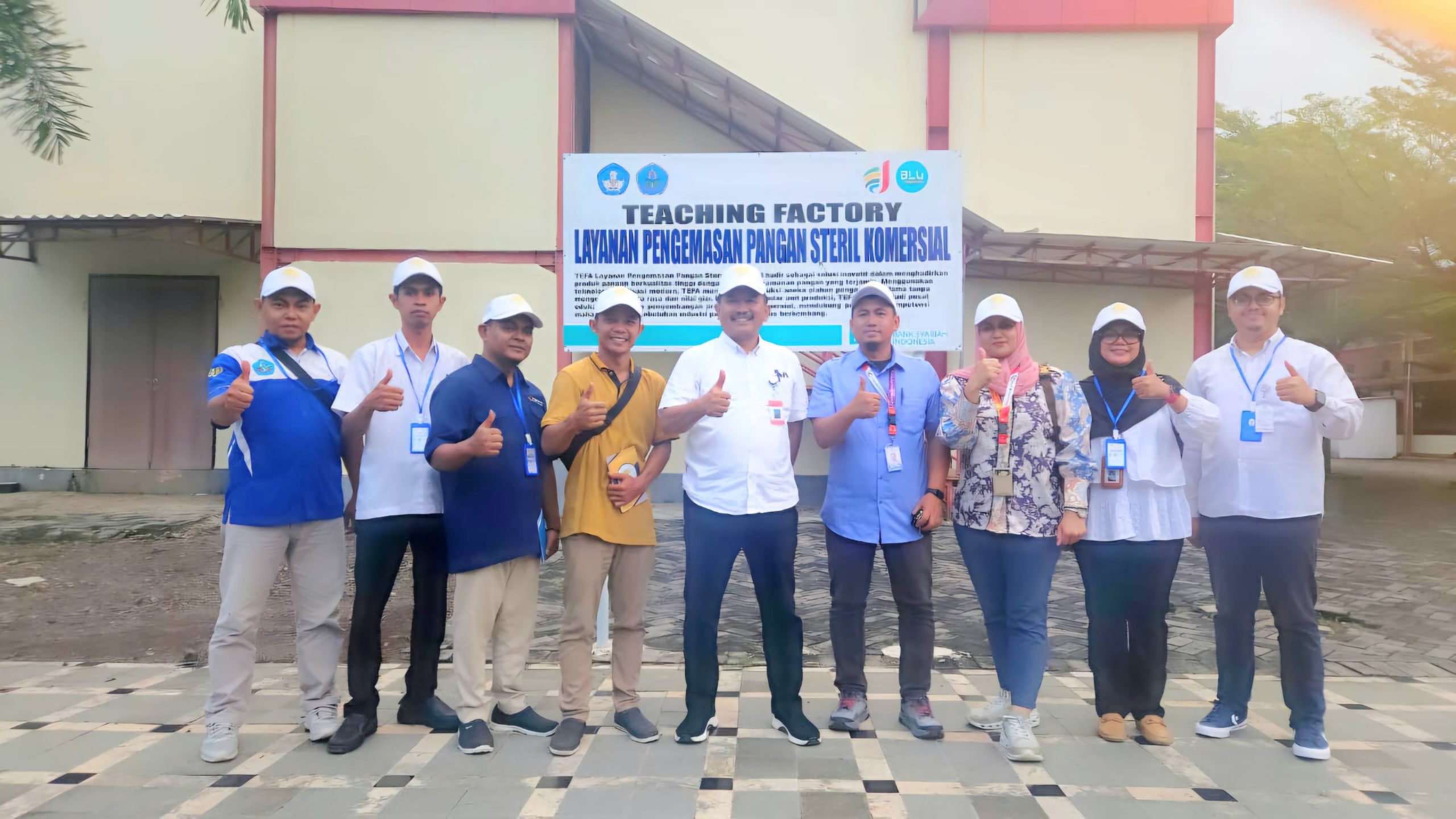
One of the most recent initiatives was the implementation of a training session on the use of two key technologies in the food industry: the double seam machine and the retort sterilizer. Held at the Teaching Factory (TEFA) of the Food Industry Technology Department, this training aimed to improve the ability of lecturers, laboratory staff, and TEFA managers in operating industry-standard equipment.
These machines are essential for canned food production and are widely used to ensure safe and high-quality food products through proper sealing and sterilization processes. By mastering this equipment, Polije staff are able to provide hands-on learning experiences for students that reflect real-world industrial conditions.
“This training reflects Polije’s serious commitment to strengthening the capabilities of our human resources,” said Dr. Agung Wahyono, Vice Director IV of Cooperation and Public Relations. “The future of education lies in industry-aligned learning, and Polije is preparing its personnel to meet those standards.”
He further emphasized that improving the technical knowledge of academic staff is a strategic step toward achieving the institutional transformation necessary for Polije’s 2035 vision. Not only does it support better teaching outcomes, but it also helps build a culture of innovation and continuous improvement on campus.
Participants in the training expressed enthusiasm about the opportunity to learn new technologies that are directly applicable in both teaching and production. The training sessions combined theoretical explanation with direct machine operation, allowing participants to gain a comprehensive understanding of each process.
Beyond skill enhancement, the initiative also aims to optimize TEFA as a productive learning space and revenue-generating unit. With better-trained personnel, TEFA can further develop its product quality, increase production capacity, and expand collaboration with food industries across Indonesia and abroad.
This training program is part of a broader roadmap by Polije to integrate teaching, research, and community service through industry-based practices. TEFA serves as a model environment where students, lecturers, and stakeholders converge in innovation and practical learning.
By continuously investing in human resource development and strengthening its link with industry demands, Polije is making steady progress toward becoming a world-class polytechnic. With every step, the institution brings its 2035 vision closer to reality—nurturing graduates who are competent, competitive, and globally relevant. (rda)