

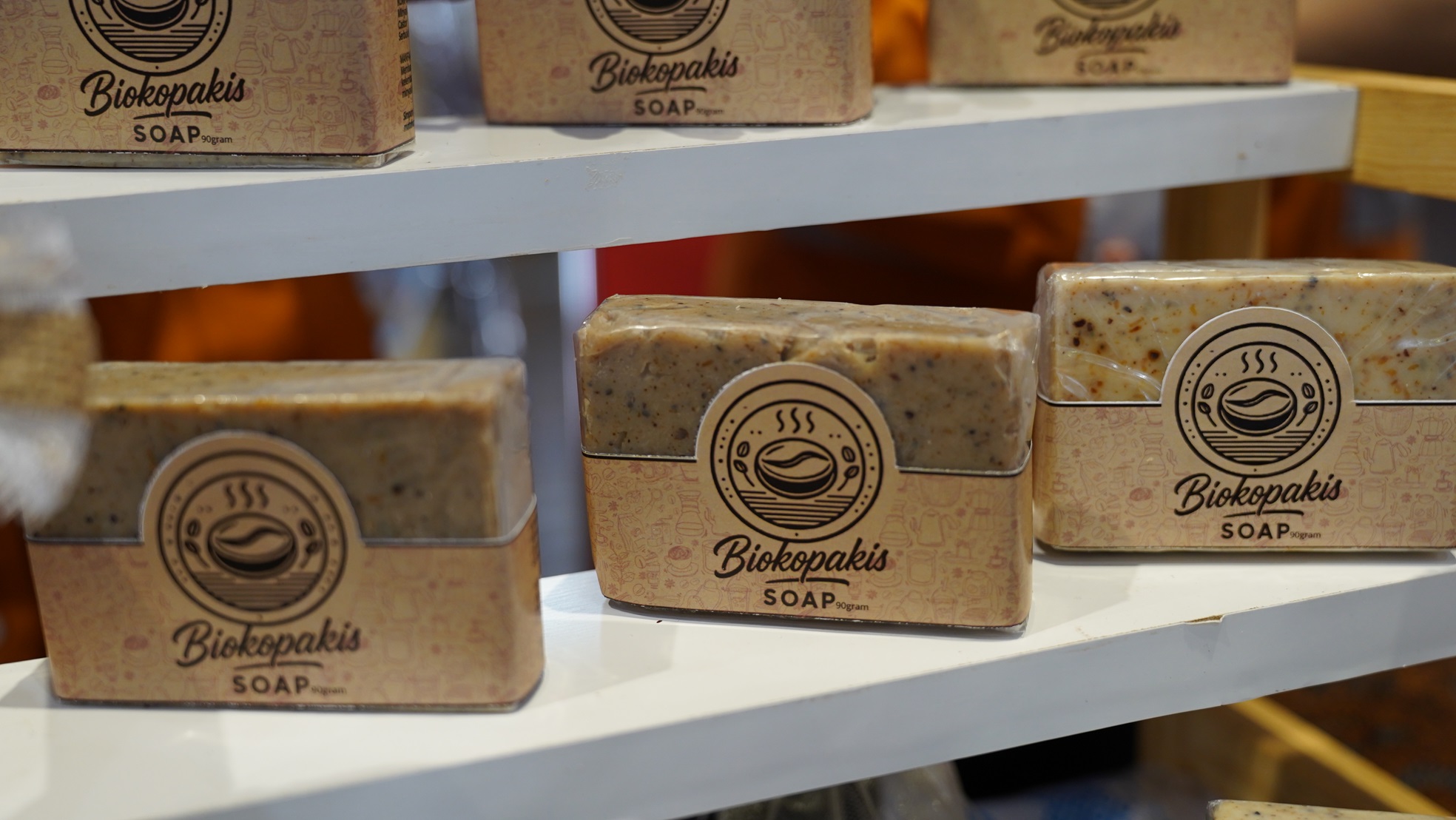
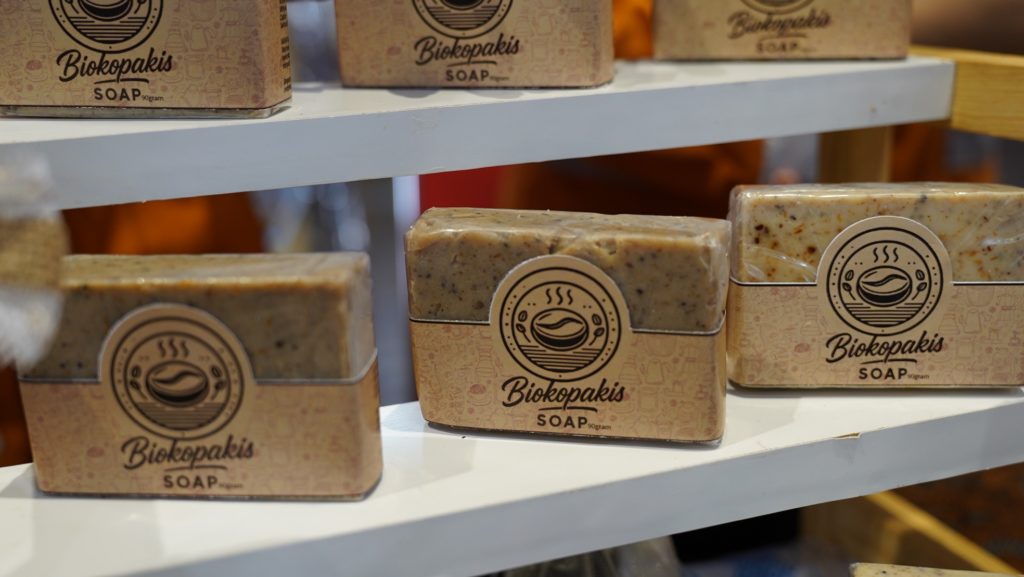
A group of Health Promotion students from Politeknik Negeri Jember (Polije), known as C2 Biokopakis, has successfully developed an environmentally friendly soap made from coffee husk waste. Their innovation, showcased during the Health Department’s Project-Based Learning (PBL) exhibition, represents a significant step in organic waste management while promoting rural productivity and creative entrepreneurship.
The products, which include bar soap and powdered detergent, aim to reduce agricultural waste, add value to local resources, and inspire communities to turn organic by-products into useful goods. Utilizing coffee husks—a common leftover from coffee production—the students transformed an often-discarded material into eco-conscious personal care items.
Team member Putri Rahmatika explained that their soap is not only sustainable but also skin-safe.
“We want to show that local waste like coffee husks holds great potential when processed properly. Through this product, we hope people realize that waste management is not only necessary but can also be economically valuable,” she said.
The soap-making process begins with weighing ingredients such as palm oil, castor oil, virgin coconut oil (VCO), and sodium hydroxide (NaOH). The NaOH is first dissolved in distilled water and cooled. Separately, the oils are mixed together and combined with ground coffee husk, and optionally, pure coffee powder as a natural exfoliant.
“Once the lye solution is added slowly while mixing, the soap batter thickens into a moldable consistency. It is then poured into molds and left to cure for two to four weeks,” Putri explained.
To ensure product safety, the soap undergoes pH testing using litmus paper.
“We confirmed the pH falls between 8 and 10, which meets Indonesian National Standard (SNI) requirements and is safe for skin,” she added.
This student innovation not only introduces a new eco-product but also cultivates the spirit of community empowerment. The project encourages local residents to explore the economic potential of waste, while promoting sustainable rural industries.
“Our hope is to foster independent communities capable of managing waste wisely and continuing to innovate using their village’s natural potential,” Putri concluded.
The Biokopakis initiative is a compelling example of how vocational students can become changemakers. By creatively addressing environmental challenges through local materials, Polije students are proving that sustainable development and rural innovation can go hand in hand—contributing not just to cleaner environments but also to stronger, self-reliant village economies in line with global sustainability goals. (rda)