


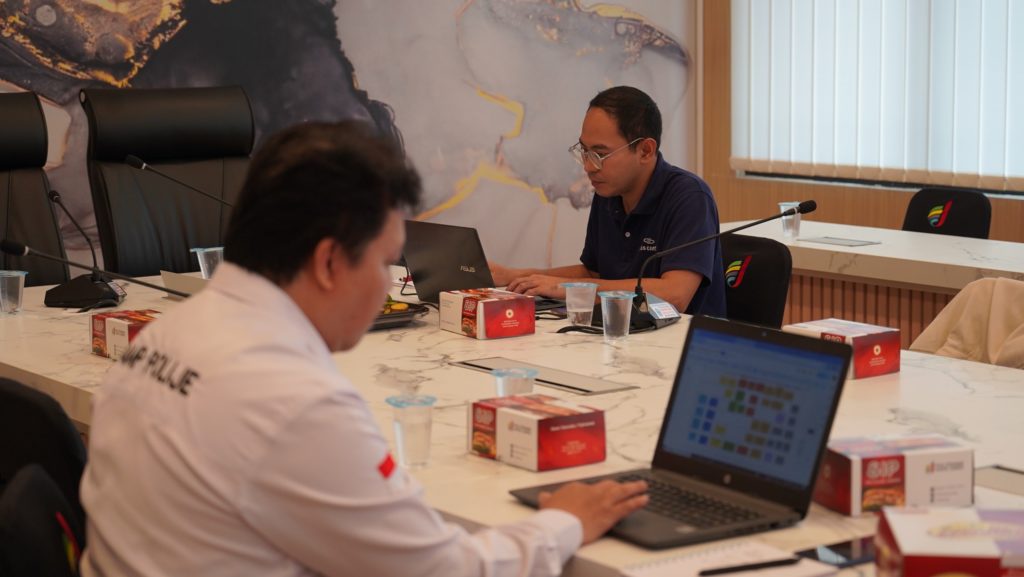
A technical meeting focusing on the development of an Industry-Based Curriculum (IBC) was held at Politeknik Negeri Jember (POLIJE), bringing together key academic leaders and curriculum development facilitators. The meeting was attended by Dr. Elly Kurniawati, STP., MP., serving as the IBC Facilitator; Ratih Ayuninghemi, S.T., M.Kom., Head of the Center for Learning Development and Quality Assurance (P4M), along with her team; and Dr. Ir. Budi Hariono, M.Si., Head of the Agricultural Production Technology (TP) Department, who was accompanied by the Program Head of D4 Seed Production Technology (TRP).
During the session, the D4 TRP program was officially designated as the pilot project for the implementation of the Industry-Based Curriculum at POLIJE. The curriculum development will follow the CDIO (Conceive, Design, Implement, Operate) framework, with modifications integrating the Outcome-Based Education (OBE) and Outcome-Based Assessment (OBA) approaches. These modifications aim to bridge the gap between academic output and industrial demands, ensuring that graduates are ready for real-world challenges.
Dr. Elly highlighted that the CDIO framework is particularly suitable for engineering-oriented programs such as TRP. Its structure encourages students to not only master theoretical knowledge but also to apply it in practical, industrial contexts. The D4 TRP program has adopted four CDIO syllabi and will implement all 12 CDIO standards, paving the way for potential international accreditation. This move is expected to enhance the competitiveness of the program and its graduates in the global job market.
Another important agenda of the meeting was the analysis of curriculum sequencing. This process involves structuring course offerings in a logical and progressive order that aligns with student development and industry needs. The curriculum team examined how to optimize learning pathways so that students can gradually build up competencies in technical, managerial, and soft skill areas.
P4M and the academic team emphasized that this pilot project serves as a benchmark for other departments and programs at POLIJE. It is expected to serve as a model for integrating industry feedback into academic planning and ensuring ongoing curriculum responsiveness.
As a result of the meeting, all parties agreed to conduct follow-up workshops on June 2 and June 10, 2025. These sessions will aim to finalize the curriculum structure, integrate stakeholder feedback, and further align the program outcomes with industry demands. The workshops will also involve external stakeholders from industry to ensure relevance and applicability.
The implementation of IBC is part of POLIJE’s broader strategy to strengthen graduate employability and institutional reputation. By aligning its curriculum with CDIO and global standards, POLIJE demonstrates its proactive commitment to innovation in vocational higher education. (rda)