

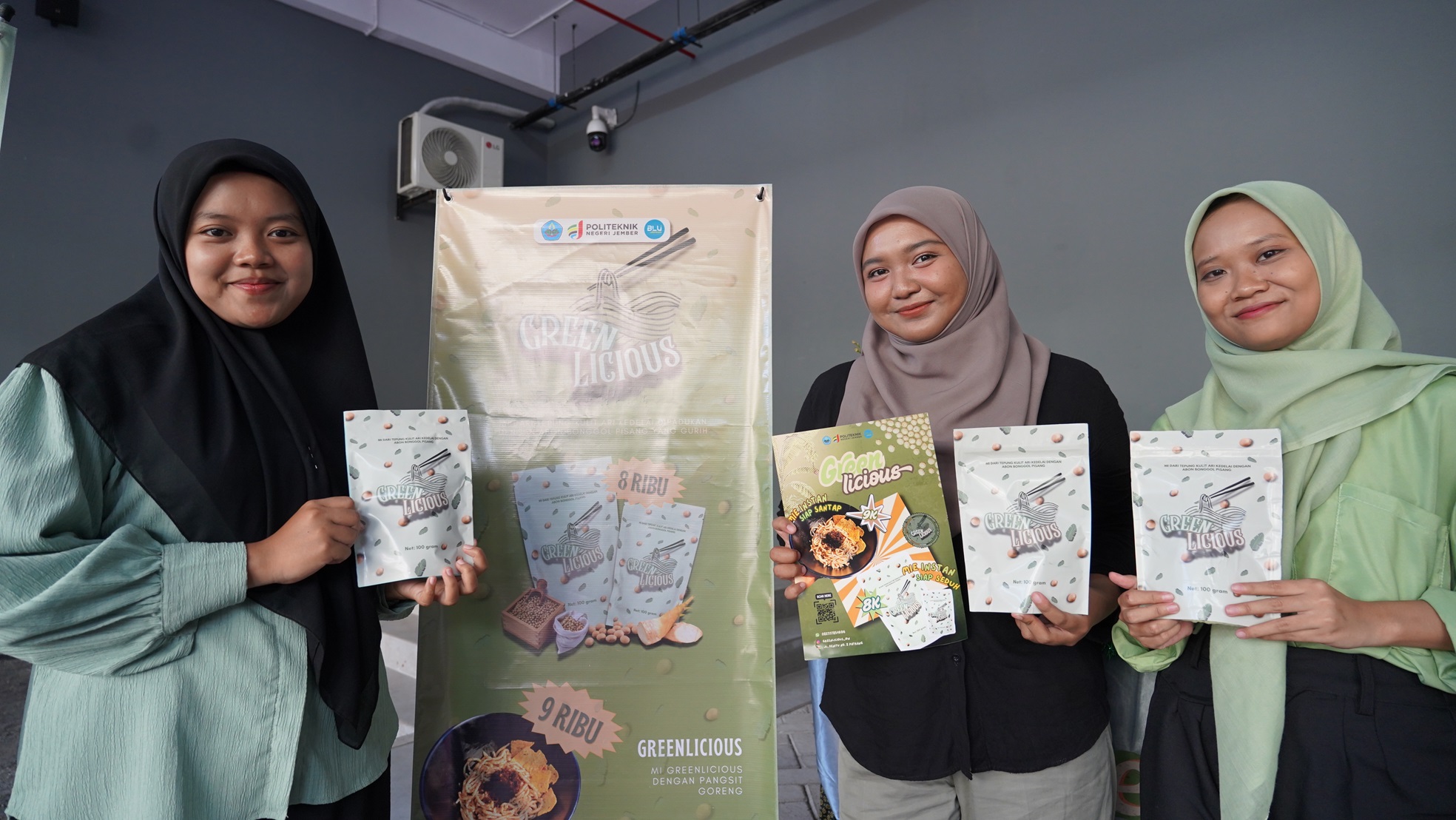
A group of students from the Agroindustry Management Applied Bachelor’s Program at Politeknik Negeri Jember (Polije) has successfully developed a healthy noodle product made from agricultural waste—specifically soybean dregs (okara) and banana stems. This innovation promotes sustainable food production and supports zero-waste principles by utilizing food industry by-products that are often discarded.
The idea was sparked by the students’ awareness of the large amount of organic waste generated from tofu production and banana harvesting, which is often underutilized. By processing these materials into consumable products, they aim to reduce environmental pollution while creating added value. Their innovation transforms what is typically seen as waste into a nutritious, functional food product.
Soybean dregs, a by-product of tofu and soy milk production, are known to be rich in protein and fiber, while banana stems contain antioxidants and dietary fiber. These ingredients were creatively formulated into a noodle product that not only retains essential nutrients but also meets consumer demands for healthier alternatives to instant noodles.
The students adopted a zero-waste production approach from raw material preparation to packaging. This means that even the residues from their noodle production process are processed into compost or reused in other applications. Such a holistic and sustainable strategy demonstrates their deep commitment to environmental stewardship.
This innovation has received positive feedback from various stakeholders, including lecturers, food technologists, and potential consumers. The product was showcased during a student innovation exhibition and is currently being refined for future mass production and potential commercialization. It is expected to have good market potential, especially among health-conscious consumers.
Polije has long encouraged its students to apply the principles of green innovation and entrepreneurship in real-world contexts. Through this initiative, students not only gain valuable research and development experience but also contribute to solving real environmental and social challenges through scientific and technological innovation.
This project exemplifies Polije’s commitment to fostering sustainability, creativity, and community engagement through education. With continued support and development, such student-led innovations could play a significant role in advancing food sustainability and responsible waste management in Indonesia and beyond. (rda)