

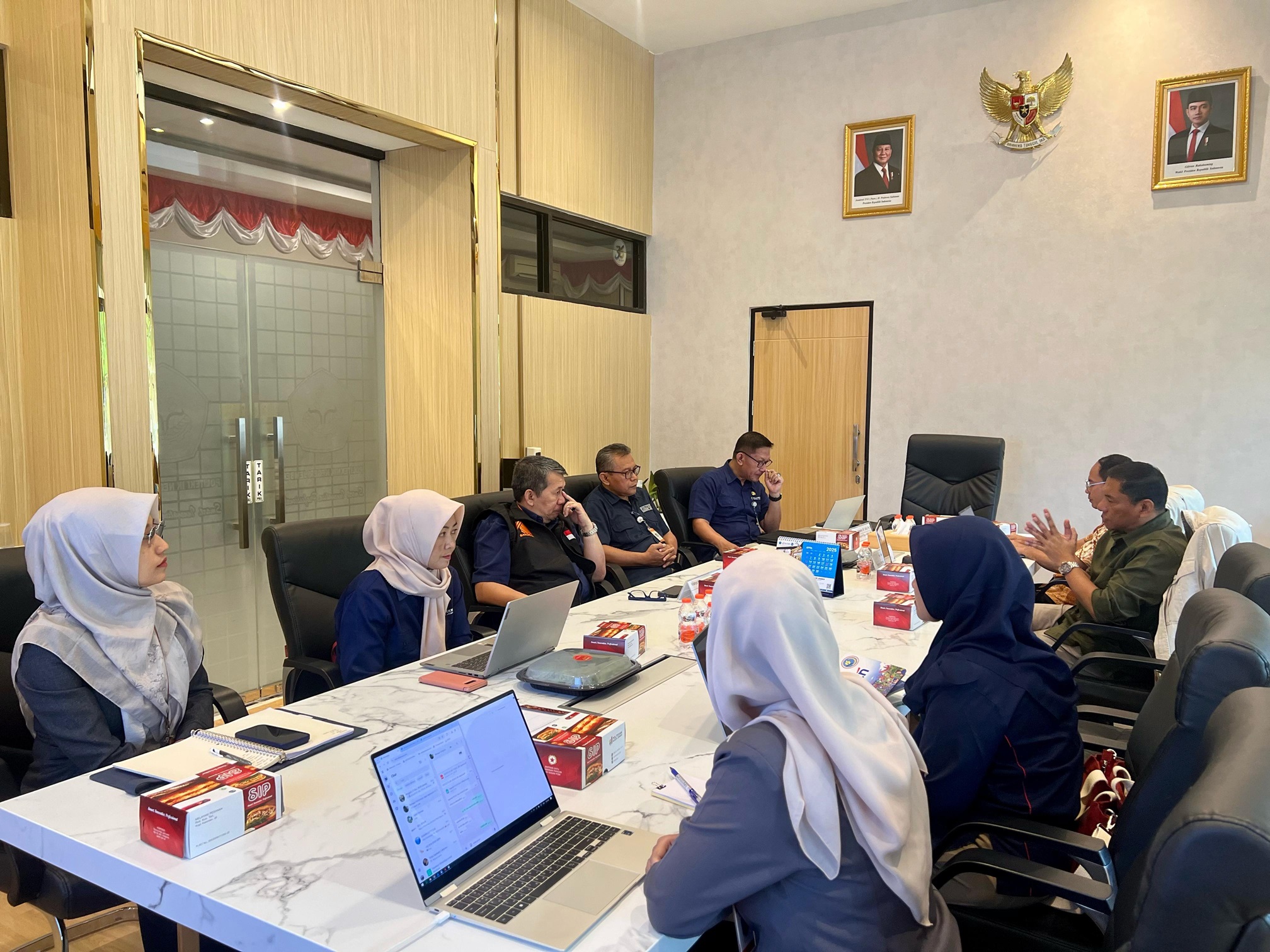
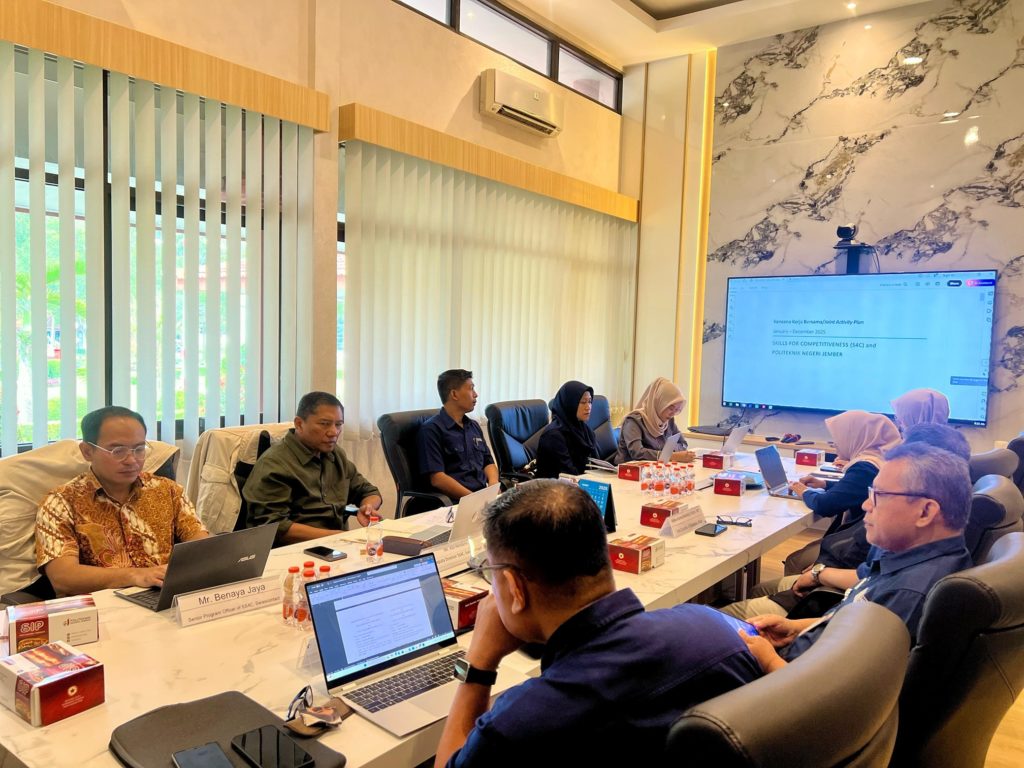
Politeknik Negeri Jember (Polije) recently welcomed a visit from the Swisscontact S4C (Skills for Competitiveness) team as part of the ongoing collaboration between both institutions. The partnership, which has been established since 2018, is currently in its second phase. Supported by the Swiss government through SECO (State Secretariat for Economic Affairs), the S4C program aims to strengthen Polytechnic education in Indonesia and aspires for Polije to become a pioneer among Vocational Higher Education Institutions (PTV) in implementing a dual TVET (Technical and Vocational Education and Training) system.
The visit was centered around the detailed discussion of the Joint Activity Plan for 2025, covering four main areas of development.
First, in Curricula Development on Waste Management, both parties discussed plans to conduct training on institutional aspects, technical operations, and financial management of waste systems. Polije will implement its waste facility management based on the training materials provided. These materials will be reviewed for their potential integration into the institution’s curriculum, aiming to develop comprehensive learning content in waste management.
Agung Wahyono, Ph.D., Vice Director for Cooperation Affairs at Polije, emphasized, “Polije will continue to innovate as a state vocational higher education institution, with a five-year projection to become a polytechnic with a fully operational waste management system supported by S4C.”
Second, under Industry-Based Curricula (IBC) Development, a focused review will be conducted on one selected study program. This includes aligning the Job of Analysis (JoA) with the needs of industry partners, evaluating course design, sequencing, and learning modules, and ensuring all elements align with verified JoA standards.
Third, the agenda included the development of Structured Internship programs. As part of the preparation, five of Polije’s industry partners will be visited to develop and review RPV (Rencana Pembelajaran di Tempat Kerja/Workplace Learning Plan) documents. This step is essential for the upcoming implementation of the SIGL (Structured Internship Guidelines and Learning) framework, with the ultimate goal of strengthening students’ practical learning experiences.
Vice Director for Student Affairs, Wahyu Dewanto, S.Kom., MT., highlighted student engagement in this area, stating, “Our students show great interest and awareness about waste management, and we are committed to providing a platform for them to learn more about it.”
Lastly, in the TEFA (Teaching Factory) Learning Centre initiative, the visit also involved a feasibility assessment to determine which TEFA units are most suitable to become learning-centered models. The team will work together to develop a new TEFA model that serves as a learning center, finalize operational guidelines, and create a detailed work plan and timeline for its implementation.
Kiki Hendarin from Swisscontact S4C expressed optimism about the program, saying, “Waste management and circular economy will become valuable assets for Polije as a PTV supported by SECO, and this can serve as a great example for other vocational institutions.”
This collaboration reflects the shared commitment of Swisscontact and Polije to enhance vocational education through innovation, industry alignment, and sustainable curriculum development. With continued support, this partnership is expected to further position Polije as a national model for dual TVET system implementation. (rda)